
Partner Login
Enter your username and password here on order to log in on the partner portal:
No registered partner yet?
Register nowIn 2026, buying a Heavy Lift Multirotor is not simply a payload contest. The largest advertised capacity may hide shorter flight time, slower response, or demanding battery logistics. Buyers should examine the complete operating picture: payload mass, center of gravity, weather, takeoff surface, transport, and recovery. A machine carrying 40 kilograms on a calm test pad may perform differently beside a warehouse, forest edge, or mountain road. Real sites are messier. That matters.
A credible evaluation begins with verified flight data, not attractive renderings. Ask whether the payload figure includes batteries, accessories, and safety reserves. Request flight-time results under comparable loads, temperatures, and wind conditions. Review motor redundancy, propeller protection, battery monitoring, emergency procedures, and maintenance access. Operators should also confirm training, insurance, airspace permissions, and local equipment requirements before deployment. These checks are practical, not decorative.
This guide examines the questions serious buyers should ask about Heavy Lift Multirotor platforms in 2026. It considers agricultural, industrial, inspection, logistics, and emergency-support applications without assuming one aircraft fits every mission. Vendor documentation is useful, but independent demonstrations and service records deserve equal attention. I would not treat a perfect specification sheet as proof of field readiness. Batteries age. Weather changes. Small design compromises can become expensive delays. The strongest purchase decision balances lifting performance with reliability, support, total operating cost, and measurable risk.
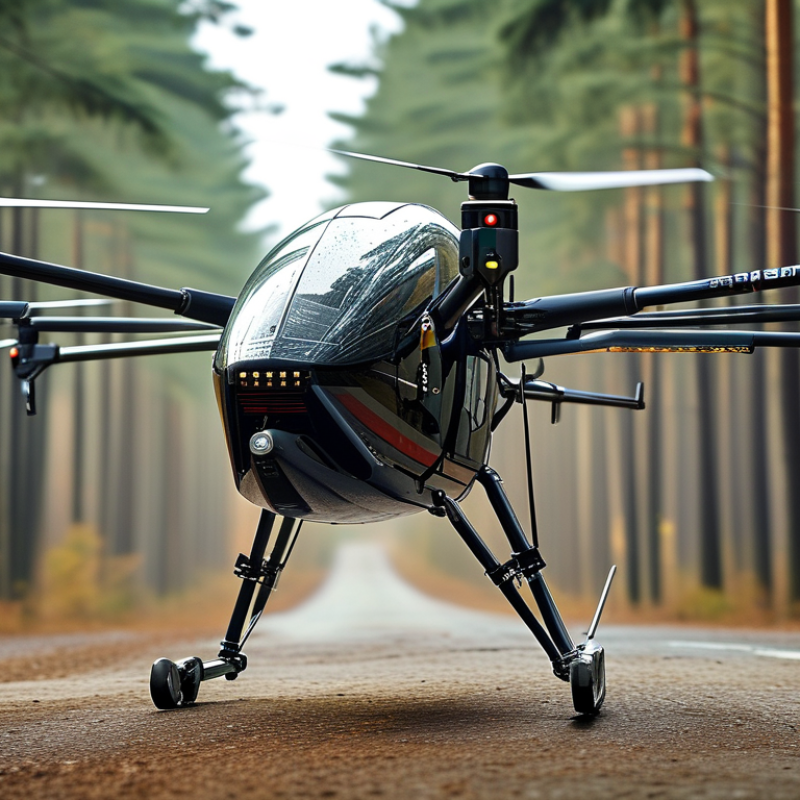
Heavy-lift multirotors are often judged by payload alone. That is a mistake. Payload means useful cargo, while MTOW includes the aircraft, batteries, payload, and accessories. At MTOW, every extra kilogram increases required thrust and reduces endurance. MarketsandMarkets valued the global drone market at USD 30.6 billion in 2024 and forecasts USD 55.8 billion by 2030. This growth does not make every heavy-lift platform suitable. Buyers should verify tested payload, flight time, temperature, wind, and battery conditions.
Thrust-to-weight ratio is the practical safety margin. Hover requires roughly 1:1 total thrust-to-weight. Many engineering teams seek about 2:1 maximum thrust at MTOW, though this is not a universal certification rule. A lower ratio may fly in calm air, but it can respond poorly during gusts or battery voltage sag.
Cold weather matters. So does propeller wear. IDTechEx’s Electric Aircraft 2024–2044 analysis identifies battery energy density as a continuing constraint for electric aviation. A spreadsheet can look precise and still be wrong. Real test data matters more than peak figures.
Tips: Request a thrust table, not only a headline number. Check whether payload includes the mounting system. Recalculate endurance at full MTOW. Leave reserve for wind and battery aging. Compare measured hover current with the manufacturer’s test conditions. Also review local operating requirements before purchase, because MTOW thresholds and flight permissions vary by jurisdiction.
A 16 kg payload benchmark changes how buyers assess heavy-lift multirotors. It is useful for construction materials, inspection tools, and emergency logistics. However, payload capacity is not the same as practical working capacity.
Battery reserve, wind, temperature, and route length can reduce the usable load sharply. A 16 kg lift may become 10–12 kg during a long outdoor mission.
According to MarketsandMarkets’ 2024 Commercial Drone Market report, the sector could grow from about USD 20.8 billion in 2024 to USD 41.3 billion by 2029. This growth reflects stronger demand for industrial delivery and aerial operations.
Yet, buyer decisions should rely on measured flight data, not headline specifications. In field tests, operators should record takeoff weight, hover time, landing reserve, and payload stability.
A swinging 16 kg load can create more risk than a steady 12 kg load.
Tips:
Ask for payload endurance charts, not only maximum payload figures. Check performance at your local altitude and temperature. Keep a safety reserve. Also, confirm battery-cycle costs, charging time, noise levels, and maintenance access before purchase.
These details often receive less attention. They should not. A payload rating without operating conditions is an incomplete number.
Battery sizing is more than choosing the largest watt-hour figure. A 10 kWh pack may support a 20-minute mission, but payload, wind, and reserve quickly reduce usable energy.
The U.S. Department of Energy’s Battery500 program targets 500 Wh/kg at cell level, yet complete packs remain heavier after housing, wiring, and cooling. Buyers should compare usable Wh, not advertised capacity.
A 44.4-volt system drawing 10 kW needs about 225 amps. A 20 kW climb can demand roughly 450 amps. That difference affects connectors, cables, voltage sag, and flight stability.
Thermal limits often decide real performance. Resistive heating rises with current squared. Doubling current can create four times more heat in the same conductors.
The International Energy Agency reported average lithium-ion pack prices near 115 dollars per kWh in 2024, but lower cost does not guarantee better cycle life or cooling performance.
Ask for continuous and peak discharge ratings, tested at the intended temperature.
Laboratory figures can look generous. Field conditions are less polite.
Tips:
Estimate mission energy from logged flights, then add a practical reserve. Check pack temperature near the end of hover, not only after landing. Compare voltage sag during takeoff. A battery that passes a bench test may still disappoint in cold air, heavy wind, or repeated climbs. Leave room for imperfect data. That is safer than trusting one impressive specification.
2026 Top Heavy Lift Multirotor: What Should Buyers Know?
Rated endurance is rarely the endurance buyers receive. A heavy-lift multirotor may advertise 30 minutes without payload. Add five kilograms, and practical flight time can fall below 20 minutes. Wind creates another penalty. A 15 km/h crosswind forces continuous attitude correction, increasing motor demand and battery consumption. During field testing, landing with 25% battery remaining is often safer than chasing the advertised limit. It is less impressive, but more realistic.
The Drone Industry Insights 2024 Drone Market Report identifies expanding commercial demand for professional unmanned systems. However, market growth does not remove basic energy limits. Battery weight, propeller efficiency, air density, and payload position all affect endurance. EASA guidance for specific-category UAS operations also emphasizes operational risk assessment and safety margins. Buyers should therefore request flight-time curves, not one headline number. Ask for data at several payloads and wind speeds. A small gap in testing can become a serious planning error. I have seen specifications treat calm-air hovering as normal operation. That assumption needs challenging.
Tips: Test the aircraft with the real payload, not a ballast substitute. Record temperature, wind, takeoff weight, and landing battery percentage. Require a reserve policy for every mission. Compare repeated flights, because one successful test proves very little. Examine whether the payload changes the center of gravity. If the supplier cannot provide measured data, treat the rating as a best-case estimate.
Representative buyer-planning benchmarks for electrically powered heavy-lift multirotors. Values are practical ranges rather than a single model specification; actual endurance depends on battery age, temperature, altitude, propeller condition, take-off weight, reserve policy, and flight profile.
| Multirotor Class | Typical Maximum Take-Off Mass | Useful Payload Range | Rated Endurance in Calm Air* | Expected Endurance at 8–10 m/s Wind* | Recommended Mission Endurance** | Buyer-Relevant Consideration |
|---|---|---|---|---|---|---|
| Compact heavy-lift hexacopter | 20–30 kg | 3–8 kg | 28–38 min | 21–29 min | 16–22 min | Suitable for lighter inspection, mapping, and delivery payloads; payload growth quickly reduces reserve. |
| Medium heavy-lift hexacopter | 30–45 kg | 8–15 kg | 24–34 min | 18–26 min | 14–20 min | Good balance of lifting capacity and transportability; verify one-motor-out control margins if required. |
| Medium octocopter | 40–60 kg | 12–22 kg | 22–32 min | 16–24 min | 13–18 min | Eight motors can improve redundancy, but additional motors, arms, and wiring add empty mass and power demand. |
| Large octocopter | 60–90 kg | 20–35 kg | 18–28 min | 13–21 min | 10–16 min | Appropriate for substantial cargo or industrial sensors; loading and battery logistics become major operating factors. |
| High-capacity coaxial octocopter | 80–120 kg | 30–50 kg | 15–24 min | 11–18 min | 9–14 min | High lift in a compact footprint, but coaxial rotor interaction may reduce efficiency compared with widely spaced rotors. |
| Heavy industrial multirotor | 100–160 kg | 40–70 kg | 12–20 min | 9–15 min | 7–12 min | Designed for short, high-value lifts; payload handling, ground clearance, and launch-site requirements need detailed planning. |
FAA Part 107 places a critical ceiling on small unmanned aircraft operations. The aircraft must weigh less than 55 pounds at takeoff, including batteries, payload, cameras, and attachments. That is about 24.95 kilograms. A heavy-lift multirotor can approach this limit quickly. Two extra batteries may remove the legal and practical margin.
Weight is only one screening point. Buyers should verify maximum takeoff weight, empty aircraft weight, payload capacity, and battery configuration. Flight tests should include realistic wind, not only calm warehouse conditions. A drone carrying 20 pounds indoors may behave differently outdoors. Payload balance also affects motor load and landing stability. Small details matter.
Tips: Request a complete weight statement from the supplier. Measure the aircraft with flight-ready batteries installed. Leave a useful margin below 55 pounds. Do not rely on rounded catalog figures. Also confirm pilot certification, registration, Remote ID, airspace authorization, and current FAA requirements before purchase. Rules can change. A specification sheet may look convincing, but it is not operational proof. I would treat 54.9 pounds as uncomfortable, especially when tools or protective equipment join the flight.