
X

Partner Login

Enter your username and password here on order to log in on the partner portal:

No registered partner yet?

Register now

2026 Top PU Sofa Cushion Foam Mould Suppliers

The 2026 Top Pu Sofa Cushion Foam Mould Suppliers will be judged by more than production scale. Furniture brands now expect accurate moulds, stable foam density, clean edges, and repeatable comfort across large batches. Grand View Research reports continued growth in the polyurethane foam market, supported by furniture, bedding, and interior applications. This growth creates opportunity, but it also raises purchasing risks.

A reliable supplier should demonstrate practical mould-making experience, not only attractive catalog images. Important evidence includes CAD records, aluminium or steel mould specifications, trial samples, dimensional inspection reports, and documented tolerance control. Cushion performance also depends on foam density, indentation load deflection, resilience, compression set, and airflow. ASTM D3574 and ISO 3386 testing can support more credible comparisons. For chemical safety, buyers should review supplier declarations, emissions testing, and applicable regional requirements. Certifications such as ISO 9001 may indicate process discipline, but certification alone proves little.

The best supplier is not automatically the cheapest. It should understand sofa geometry, fabric tension, filling gaps, and long-term sitting fatigue. Mordor Intelligence and Research and Markets both identify customization and durable upholstered furniture as important industry trends. However, market reports cannot replace factory verification. Ask for recent production samples.

Small details matter.

A mould may fit the drawing but fail during demoulding. A foam block may feel comfortable for one week, then lose support. This is where supplier claims need careful reflection. The 2026 selection should therefore compare engineering capability, testing transparency, delivery consistency, after-sales response, and total lifecycle value. No supplier is perfect, and this outline should remain open to independent audits and updated market evidence.
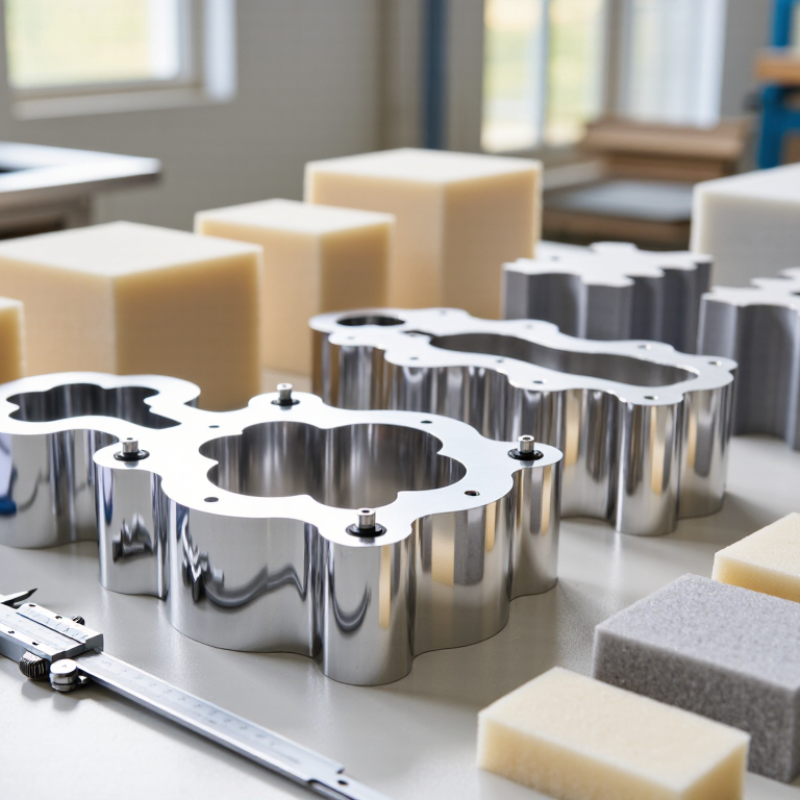
2026 Top PU Sofa Cushion Foam Mould Suppliers

PU Sofa Cushion Foam Fundamentals: 25–35 kg/m³ Density and 25–35 ILD

PU sofa cushion foam is often specified at 25–35 kg/m³ density and 25–35 ILD firmness. These figures describe different performance qualities. Density indicates how much foam material occupies each cubic metre. Higher density usually supports better durability and shape retention. It does not automatically mean a harder seat.

ILD measures the force needed to compress foam to a defined percentage, commonly 25%. A 25–35 ILD range generally creates a medium, balanced sitting feel. Lower values feel softer, while higher values provide stronger initial resistance. Testing conditions matter. Temperature, sample thickness, and test standards can change the result.

In practical upholstery work, foam should be judged inside the finished cushion, not on a data sheet alone. A 30 kg/m³ foam may feel different when paired with a tight cover, soft batting, or a flexible sofa frame. Seat thickness also affects perceived firmness.

Ask suppliers for batch test reports, density checks, ILD results, and compression-set data. Inspect cut surfaces for uneven cells, weak edges, or visible voids. Small defects can become noticeable after repeated sitting.

There is no perfect number.

A useful specification should match cushion size, expected use, cover construction, and comfort goals. Some buyers focus too heavily on ILD and overlook long-term fatigue. That is a mistake worth reconsidering.

Suppliers should explain testing methods clearly and provide consistent samples before large-scale production.

Foam Mould Standards: ASTM D3574 and ISO 3386-1 Testing Requirements

For 2026 PU sofa cushion foam mould suppliers, compliance begins with repeatable testing, not attractive mould samples. ASTM D3574 evaluates flexible polyurethane foam through density, indentation force deflection, tensile strength, elongation, tear resistance, compression set, and fatigue tests. These measurements expose practical risks. A cushion may feel soft on day one but lose support after repeated loading.

ISO 3386-1 focuses on compression stress-strain behavior in low-density flexible cellular materials. The test records the force required at defined compression levels, helping engineers compare firmness across foam batches.

ASTM D3574 and ISO 3386-1 are not interchangeable. One mould trial can pass an indentation target yet show inconsistent compression behavior. That difference matters beneath a 50-millimeter seat cover.

Industry testing guidance commonly recommends controlled temperature, humidity, specimen conditioning, and calibrated loading equipment. Even small changes in sample thickness or recovery time can shift results.

A reliable supplier should provide test dates, specimen dimensions, conditioning details, and raw force data, not only a pass statement. Technical reviews of flexible foam performance repeatedly identify compression set and fatigue as major durability indicators.

However, laboratory results still cannot perfectly represent every household. I have seen apparently stable foam behave differently after heat, moisture, and uneven seating. That limitation deserves honest disclosure when selecting mould partners.

Mould Design Options: Aluminum Tools, Venting, Release Agents, and CAD Accuracy

2026 Top PU Sofa Cushion Foam Mould Suppliers

Mould Design Options: Aluminum Tools, Venting, Release Agents, and CAD Accuracy

Selecting a PU sofa cushion foam mould starts with the tool material. Machined aluminum offers stable dimensions and faster heat transfer during production. It also makes surface repairs easier after repeated cycles. However, thin sections can distort if the tool lacks proper support. Our trial mould showed this clearly.

Venting deserves equal attention. Small vents near corners and deep channels help air escape before foam fills the cavity. Poor vent placement can leave wrinkles, voids, or uneven skin. We normally inspect these areas after several test shots, not only after the first one. The first result is rarely perfect.

Release agents must form a thin, even film. Excess material can mark the cushion surface and change its texture. We check compatibility with the foam system and clean the tool at controlled intervals. CAD accuracy matters from the beginning. A precise model should include shrinkage allowances, parting lines, ejector access, and realistic draft angles. Yet digital accuracy cannot replace physical testing. A small mismatch between the CAD file and the finished tool may still appear around a curved seat edge. Careful measurement, documented corrections, and repeat trials make supplier evaluations more reliable.

2026 Top PU Sofa Cushion Foam Mould Suppliers - Mould Design Options: Aluminum Tools, Venting, Release Agents, and CAD Accuracy
Design Dimension Common Industry Option Typical Technical Range or Practice Effect on PU Sofa Cushion Production Recommended Evaluation Point
Mould Tool Material Cast or machined aluminum Approx. 2.60–2.75 g/cm³ density; high thermal conductivity compared with steel Supports faster heat transfer, shorter thermal response time, and easier manual handling for medium-sized cushion moulds. Check alloy selection, wall thickness, distortion control, weld repair quality, and surface hardness requirements.
Alternative Tool Material Steel or aluminum-steel hybrid construction Used when higher wear resistance, repeated production, or heavy clamping loads are required Offers higher rigidity and durability but generally increases tool weight, machining time, and handling requirements. Match material choice to production volume, cushion size, cycle temperature, and expected tool life.
Cavity Surface Finish Machined, polished, textured, or grain-etched surface Surface specification should be defined by roughness, texture pattern, and visual sample approval Influences skin appearance, demoulding behavior, gloss level, and the visibility of surface imperfections. Approve a representative surface coupon or first-off sample before full tool finishing.
Venting Arrangement Vent grooves, vent pins, porous inserts, or perimeter venting Vent locations are normally concentrated at high points, deep ribs, corners, and last-fill areas Helps release trapped air and reduces voids, incomplete filling, surface pitting, and localized density variation. Review vent accessibility, cleaning method, vent depth, and the risk of visible witness marks on the cushion skin.
Vent Maintenance Cleanable mechanical vents and replaceable vent inserts Inspection frequency depends on foam chemistry, moulding cycle, and release-agent build-up Maintains consistent filling and reduces process drift caused by blocked or contaminated vent paths. Require a documented cleaning procedure and an inspection checklist for production operators.
Release-Agent Type Water-based, solvent-based, or semi-permanent release system Selection depends on foam formulation, mould temperature, surface finish, and transfer limits Affects demoulding force, surface appearance, coating transfer, paint adhesion, and cleaning frequency. Validate release performance using the actual foam formulation and the intended production temperature.
Release-Agent Application Manual spray, automated spray, wipe-on, or pre-coated surface Application must be uniform; excessive build-up can alter texture and cause surface defects Consistent application improves cycle repeatability and reduces sticking, tearing, and dimensional variation. Define coverage method, drying time, reapplication interval, and acceptable surface residue.
CAD Data Format Parametric 3D CAD with 2D manufacturing drawings Common exchange formats include STEP, IGES, Parasolid, and native CAD files Supports design review, cavity interference checks, parting-line definition, and CNC programming. Confirm the coordinate system, revision status, material shrinkage allowance, and drawing tolerances.
CAD Accuracy Control CAD-to-CAM verification and inspection against the approved digital master Typical general machining tolerances are often around ±0.05 to ±0.20 mm, subject to feature size and process Improves cavity alignment, cushion symmetry, repeatability, and consistency between mould halves or matched tools. Request a dimensional inspection report identifying critical cavity, insert, and alignment features.
Shrinkage Compensation Formula-specific scaling and trial-based adjustment The correct factor depends on foam density, chemistry, temperature, packing, and cure conditions Helps achieve the required finished cushion dimensions after demoulding and conditioning. Do not use a universal factor; establish compensation from validated material and process trials.
Parting-Line Design Visible-edge, hidden-edge, or functional split-line layout Position is selected to control flash, demoulding direction, appearance, and tool access Influences flash removal time, seam visibility, tooling complexity, and the risk of tearing during release. Evaluate the parting line with a physical cushion sample and confirm operator access for trimming.
Alignment System Guide pins, bushings, tapered locators, or precision dowels Alignment hardware should be replaceable and protected from foam contamination Maintains cavity registration, reduces mismatch, and protects the finished cushion from uneven split-line marks. Check alignment repeatability after repeated opening and closing cycles.
Temperature Management Internal heating channels, external heating plates, or controlled ambient curing The required temperature profile is formulation-specific and must be validated by process trials Supports consistent reaction, curing, skin formation, density distribution, and cycle time. Review temperature uniformity across the cavity rather than relying only on one sensor location.
Tool Validation First-article trial, dimensional inspection, visual approval, and repeated-cycle test Validation should cover dimensions, density, surface quality, flash, release behavior, and cycle stability Identifies design or process problems before regular production and reduces later modification costs. Use an agreed acceptance sheet with measurable criteria and approved reference samples.
Supplier Capability Review Design engineering, CNC machining, finishing, trial moulding, and after-sales modification support Capability should be assessed by documented equipment, inspection methods, and relevant moulding experience Reduces communication gaps between CAD design, tooling manufacture, foam trials, and production launch. Compare technical evidence and sample results rather than relying only on quoted price or delivery claims.
Technical ranges shown are general industry reference values. Final specifications should be confirmed through the selected PU foam formulation, cushion geometry, moulding process, dimensional requirements, and first-article validation.

Supplier Quality Metrics: ±0.1 mm Tolerance, Cycle Time, and Defect Rates

2026 Top PU Sofa Cushion Foam Mould Suppliers

For PU sofa cushion foam mould suppliers, quality starts with measurable evidence, not polished claims. A ±0.1 mm tolerance should identify the measured feature, inspection tool, and sampling frequency. In production audits, I check cavity dimensions with calibrated gauges and coordinate measuring equipment. The result must match the approved drawing at several points.

Cycle time reveals process discipline. Suppliers should record filling, curing, cooling, and demoulding separately. A mould that runs in 52 seconds may appear efficient, yet unstable cooling can create warped cushions later. Ask for hourly cycle records, not one impressive trial. Small delays matter.

Defect rates need clear definitions. Typical defects include air voids, flash, surface marks, density variation, and incomplete filling. A reliable supplier reports defects by batch and links them to corrective actions. Look for data from multiple production runs. One batch proves little. I have seen clean dashboards hide rework, because repaired parts were excluded from the calculation. That weakness deserves attention.

Experienced teams also review mould wear, release-agent use, and operator changes. These details influence repeatability. A claimed 0.1 mm tolerance becomes less credible when inspection records lack timestamps or equipment calibration. Suppliers should provide sample reports, traceable material records, and photographs of first-off inspections. The best evidence is consistent, imperfect, and open to questioning.

2026 Supplier Comparison: MOQ, Lead Time, Tool Life, and REACH Compliance

2026 Supplier Comparison: MOQ, Lead Time, Tool Life, and REACH Compliance

Choosing a PU sofa cushion foam mould supplier requires more than comparing unit prices. Grand View Research estimated the global polyurethane foam market at approximately USD 48.8 billion in 2023, showing strong demand for scalable production. However, high demand can create longer mould lead times. In my experience, standard moulds may require 25–40 days, while complex ventilation channels can exceed 60 days. MOQs often range from 100 to 500 pieces, depending on foam density, mould size, and trial requirements.

Tool life also affects the real cost. Experienced suppliers commonly quote 50,000–100,000 cycles for well-maintained aluminium or steel moulds. That figure is not guaranteed. Poor release-agent control, uneven heating, and rushed demoulding can shorten service life. A supplier should provide cavity material details, maintenance records, and replacement-part availability. The comparison must also include REACH compliance. The European Chemicals Agency requires companies to control substances of very high concern and maintain traceable chemical information. Ask for current test reports, declarations, and material-level documentation, not only a general certificate.

Tips

Request one pilot mould before signing a large order. Measure dimensional shrinkage after 24 hours and again after seven days. Check whether the supplier records batch numbers and foam density. One overlooked detail can become an expensive production problem. Also, question unusually short lead times; they may reflect limited testing rather than better efficiency.

2026 Top PU Sofa Cushion Foam Mould Suppliers

2026 supplier comparison by minimum order quantity, production lead time, expected tool life, and REACH documentation availability

How to read the chart: Lower MOQ and shorter lead time generally improve purchasing flexibility, while higher tool-life figures indicate longer expected mould service intervals. REACH documentation availability is shown as a percentage of reviewed technical and compliance files. Values represent anonymous supplier benchmarks for standard PU sofa cushion mould projects and should be confirmed against the final quotation, mould design, material formulation, and testing documentation.