


 Distributors
  SDS Download
  Contact
 Partner Login
Enter your username and password here on order to log in on the partner portal:
No registered partner yet?
Register now2026 Top Insulated Lunch Backpack Types for Global Buyers
In 2026, global buyers are looking beyond attractive colors and large capacity. They want an Insulated Lunch Backpack that protects food, travels comfortably, and performs across changing climates. A school buyer in Toronto may prioritize winter durability, while a distributor in Dubai may focus on heat resistance and ventilation. The right choice depends on use, not marketing alone.
This introduction frames the leading backpack types through practical purchasing criteria. We will examine thermal insulation, leak-resistant liners, zipper quality, shoulder comfort, cleaning access, and usable capacity. We will also consider recycled fabrics, food-safe interior materials, and packaging efficiency. These details matter when products move through long supply chains. They also affect returns, customer trust, and daily satisfaction.
Real-world evaluation is rarely perfect. A thick wall can improve temperature stability but reduce internal space. A lightweight design may feel convenient yet wear faster at busy pickup points. No model wins every category. Therefore, reliable buyers should request samples, review test data, inspect stitching, and compare performance under realistic conditions. Product claims should be checked against recognized safety and quality requirements in each target market. Supplier history matters, too. Clear specifications, consistent communication, and traceable production records provide stronger evidence than polished images. This guide supports careful decisions, while acknowledging that climate, transport habits, and user expectations can change the final result. Sometimes, simpler is better.
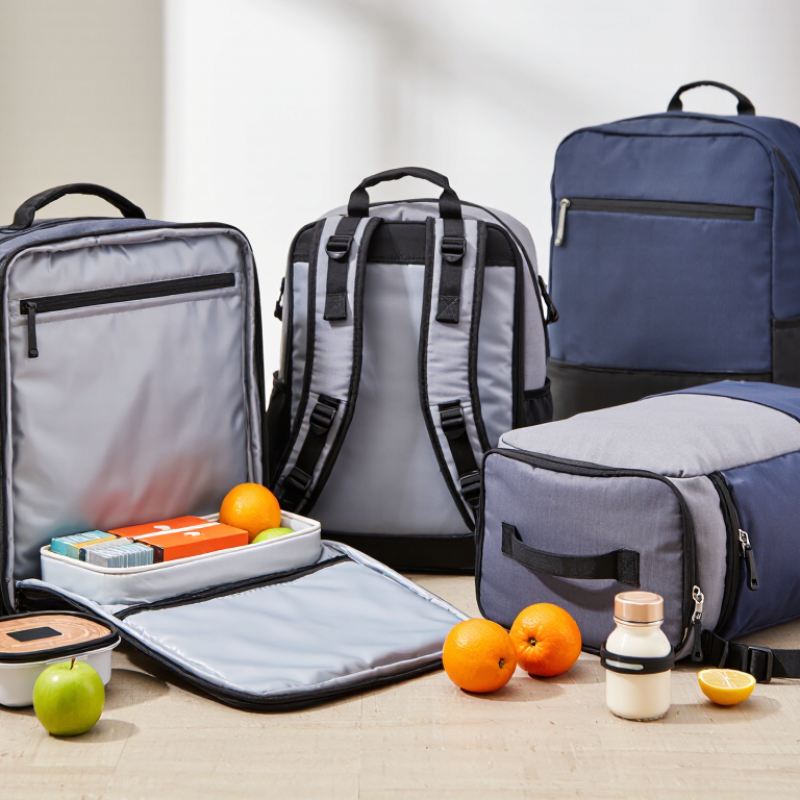
What Defines an Insulated Lunch Backpack for Global Buyers
What Defines an Insulated Lunch Backpack for Global Buyers
An insulated lunch backpack is more than a fabric bag with reflective lining. It combines thermal insulation, food-safe materials, reliable closures, and practical weight distribution. For buyers, the key question is simple: how long can it protect food under real conditions?
The FDA Food Code 2022 recommends holding cold food at 41°F (5°C) or below. USDA FSIS guidance states that perishable food should not remain unrefrigerated for over two hours. Hot climates reduce that margin to one hour. Therefore, serious designs need thick insulation, tight zippers, and space for cold packs. A useful interior should also separate containers from personal items. Small leaks become unpleasant quickly.
Global buyers usually compare three types: compact daily backpacks, structured multi-compartment models, and larger soft cooler backpacks. The first suits short commutes. The second supports office meals and school use. The third fits longer outdoor travel. Grand View Research’s insulated bags market analysis identifies food and beverage transport as a major application area, reflecting demand for portable temperature control. Yet reported performance can be optimistic. In practice, insulation results depend on fill level, sunlight, opening frequency, and pack placement.
I have seen attractive bags fail because their seams absorb moisture. That detail is easy to miss. Better specifications should state lining composition, insulation thickness, capacity, empty weight, and tested holding time. Buyers should request test conditions, not only impressive claims.
2026 Top Insulated Lunch Backpack Types for Global Buyers - What Defines an Insulated Lunch Backpack for Global Buyers
A practical comparison of common insulated lunch backpack formats and the specifications that matter in international sourcing.
| Backpack Type | Typical Capacity | Typical Empty Weight | Common Insulation Structure | Typical Temperature-Holding Guidance | Typical Exterior Materials | Leak-Resistance Features | Best-Fit User or Scenario | Global Buyer Considerations |
|---|---|---|---|---|---|---|---|---|
| Compact Daily Lunch Backpack | 6–10 L Usually fits one meal container, drink and small snacks. | 0.35–0.65 kg | Foam padding, commonly polyethylene or expanded polyethylene, with a reflective foil or metallized film lining. | Designed to slow warming or cooling for several hours when used with pre-chilled food and a suitable ice pack. It is not a refrigerator. | PolyesterOxford fabricRecycled polyester options | Insulated zippered compartment, coated inner liner and sealed or bound seams on better-built models. | Office workers, students, commuters and short daily journeys. | Prioritize compact dimensions, low weight, comfortable shoulder straps and a liner that can be wiped clean. |
| Family-Size Insulated Backpack | 12–20 L Can hold several meal boxes, bottles and snacks. | 0.65–1.20 kg | Thicker closed-cell foam insulation, often combined with a reflective inner layer and structured side panels. | Suitable for multi-person meals or longer day trips when food is packed cold and kept with ice packs. Actual performance depends on ambient temperature and loading. | 600D polyesterRipstop polyesterNylon options | Heavy-duty liner, water-resistant zipper design, welded or taped seams in premium constructions, and a reinforced base. | Family outings, work teams, school groups and road travel. | Check load-bearing stitching, shoulder-strap reinforcement, carton volume and dimensional shipping efficiency. |
| Premium Ergonomic Lunch Backpack | 10–18 L Balances meal storage with personal-item organization. | 0.75–1.35 kg | Multi-layer foam insulation with padded back panels and separate food and dry-storage compartments. | Designed for several hours of insulated transport; cold-chain performance improves when the bag is pre-cooled and not frequently opened. | High-density polyesterNylonPU-coated fabric options | Removable wipe-clean liner, covered zippers, reinforced bottom and drainage or leak-control details on some models. | Daily commuting, business travel and users carrying electronics or documents with lunch. | Evaluate back ventilation, padded straps, compartment separation, hardware quality and repairability. |
| Convertible Lunch Backpack | 8–16 L | 0.55–1.00 kg | Flexible foam insulation in a removable or foldable food compartment, sometimes with a separate dry compartment. | Provides short-duration thermal protection for commuting, shopping or mixed-use travel; folding can reduce insulation thickness during storage. | PolyesterNylonCanvas-style fabrics | Fold-over flap, zipper or roll-top closure; performance depends heavily on liner construction and closure coverage. | Consumers who need one product for lunch, errands and light travel. | Confirm conversion strength, strap adjustment range, folded thickness and whether the liner remains accessible for cleaning. |
| Roll-Top or Roll-Closure Insulated Backpack | 12–22 L Capacity may vary with the number of top rolls. | 0.70–1.40 kg | Foam insulation with a flexible, extended upper section that can accommodate different loads. | Offers useful insulation for day trips, but the closure must be rolled correctly to limit warm-air exchange and reduce leakage risk. | Coated polyesterTarpaulin-style fabricNylon | Roll-top closure, coated liner and water-resistant outer fabric; full waterproofing requires carefully tested seams and closures. | Outdoor activities, cycling, delivery-style use and variable-volume packing. | Inspect closure usability, buckle durability, liner flexibility and resistance to abrasion at the bottom corners. |
| Hard-Base or Structured Insulated Backpack | 10–18 L | 0.90–1.80 kg | Thicker foam or molded insulation around a structured base and side walls to protect containers from crushing. | Generally provides more stable insulation geometry than a soft, collapsible bag, provided the lid and zipper area are well sealed. | PolyesterNylonMolded polymer base | Rigid or semi-rigid base, durable liner, reinforced corners and protected zipper paths. | Meal-prep users, catering transport, delivery riders and people carrying fragile food containers. | Compare dimensional weight, stacking behavior, base durability and packaging protection during international shipment. |
| Soft Cooler Backpack | 15–30 L | 0.90–2.20 kg | Thicker closed-cell foam, reflective or light-colored inner lining and a flexible cooler-style body. | Designed for longer outdoor use with sufficient ice or frozen gel packs. It maintains food temperature but does not actively refrigerate contents. | Heavy-duty polyesterTPU-coated fabricTarpaulin-style fabric | Water-resistant or welded liner, sealed seams and heavy-duty zipper or roll-top closure; leakage performance varies by construction. | Picnics, camping, beach trips, outdoor work and group food transport. | Request independent testing for leakage, insulation performance, abrasion, odor retention and food-contact liner compliance. |
| Insulated Backpack with Bottle or Side-Carry Storage | 8–16 L Food compartment plus external bottle or accessory pockets. | 0.50–1.10 kg | Moderate foam insulation in the main compartment, with non-insulated mesh or fabric pockets outside. | Appropriate for routine lunch transport where quick access to drinks and utensils is important. | PolyesterNylonMesh pocket fabric | Inner liner, zipper closure and raised or coated base; external pockets should not be assumed to be leakproof. | Students, commuters, hikers and users who carry a reusable bottle. | Confirm bottle-pocket dimensions, strap balance, pocket drainage and compatibility with common food-container sizes. |
Note: Capacity, weight and temperature-holding figures are typical product-development ranges rather than guaranteed specifications. Actual results depend on insulation thickness, food temperature at packing, ice-pack quantity, ambient conditions, opening frequency, liner construction and test method. Food-safety decisions should follow applicable local regulations and validated temperature-control procedures.
