X

Partner Login

Enter your username and password here on order to log in on the partner portal:

No registered partner yet?

Register now

Top Code Printer Manufacturers for Global Buyers?

Choosing among the top Code Printer manufacturers requires more than comparing prices or glossy product brochures. Global buyers must examine print quality, uptime, consumable costs, software compatibility, and local technical support. A reliable machine should produce sharp lot numbers, barcodes, dates, and batch codes on real production lines, not only in demonstrations.

W. Edwards Deming, a respected manufacturing-quality expert, said, “Quality comes not from inspection, but from the improvement of the production process.” His principle remains highly relevant to coding and marking equipment. A strong Code Printer manufacturer should help improve the entire process, from artwork approval to verification and maintenance. Continuous inkjet printers may suit fast beverage lines. Thermal inkjet systems can offer clean, low-maintenance printing for cartons. Laser markers may reduce consumable use, but they require careful material testing and proper safety controls.

Practical details matter.

Buyers should test print adhesion on their actual packaging. Stainless-steel housings, washable designs, and stable software can make a major difference in demanding factories. However, no ranking is flawless. A manufacturer praised for excellent laser systems may not provide the best thermal-transfer solution. Regional service quality can also change the buying decision completely. Spare-part access, operator training, response time, and language support deserve equal attention.

This guide compares leading manufacturers through an evidence-based lens. It considers application fit, engineering experience, global presence, reliability, and after-sales service. Some conclusions may remain debatable. That is intentional. The best Code Printer is not always the most expensive model, but the one that performs consistently in a buyer’s actual environment.
Top Code Printer Manufacturers for Global Buyers?

What Are Code Printers and How Do They Work?

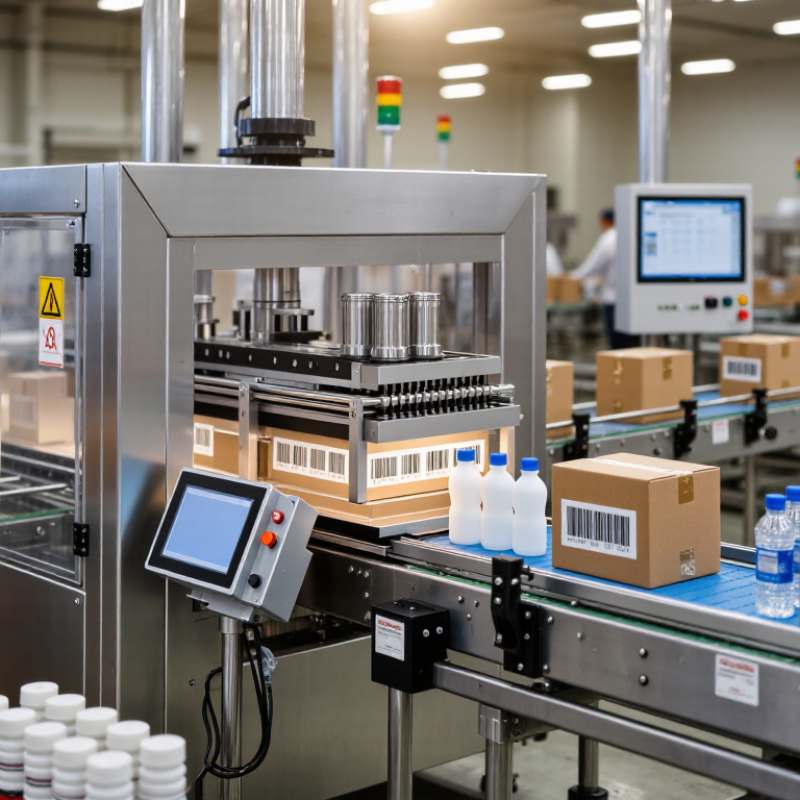
Code printers create readable marks on products, packaging, or labels. These marks may include dates, batch numbers, barcodes, or tracking codes. Their main purpose is identification and traceability during production and distribution.

Most systems use inkjet, laser, thermal transfer, or thermal inkjet technology. An inkjet printer sprays tiny droplets onto a moving surface. A laser changes the surface through controlled heat and light. Thermal transfer uses a heated printhead to press ink from a ribbon onto the package. The controller receives digital data, formats the message, and prints it at a set speed. Sensors detect each item and trigger printing at the correct position. Small errors matter.

In real factories, performance depends on more than printer specifications. Surface texture, dust, humidity, conveyor speed, and cleaning routines can affect print quality. Operators should test codes on the actual material before purchasing equipment. They should also verify software compatibility, print resolution, maintenance needs, and local safety requirements. A faster printer is not always the better choice. Sometimes, simpler equipment creates fewer production problems.

Tips: Check contrast under normal lighting. Test curved and uneven surfaces. Keep spare consumables available. Ask for sample prints, not only technical sheets. Review failure records honestly; no system performs perfectly.

Key Criteria for Evaluating Global Code Printer Manufacturers

Selecting a code printer manufacturer requires more than comparing purchase prices. Global buyers should assess print quality, uptime, service coverage, and compliance documentation. MarketsandMarkets estimated the coding and marking market at about USD 5.3 billion in 2024, with continued growth expected through 2029. That expansion increases supplier choice, but it also makes evaluation harder.

Ask manufacturers for verified performance data from comparable production lines. A reliable supplier should disclose maximum line speed, minimum character height, print resolution, ink consumption, and failure rates. Request a live sample using your substrate, conveyor speed, and packaging shape. Small details matter. A code that looks sharp on paper may blur on recycled film or dusty cartons. PMMI research has repeatedly identified labor efficiency and equipment reliability as major packaging priorities. Therefore, remote diagnostics, spare-parts availability, and technician response times deserve contractual attention.

Review the total cost over five years, not only the invoice. Include consumables, planned maintenance, software updates, training, energy use, and disposal requirements. ISO 9001 certification can indicate controlled processes, but it does not guarantee excellent field support. Check audit records, warranty limits, and customer references in your target regions. Be cautious with impressive uptime claims. They may reflect controlled test conditions rather than difficult factory environments. A stronger decision combines factory visits, independent testing, and written service-level commitments. Even then, some uncertainty remains. Forecasts change, and every production site behaves differently.

Leading Code Printer Manufacturers by Technology and Industry

Code printer selection now depends on production speed, substrate, and compliance needs.

Continuous inkjet suits fast beverage and food lines, especially for curved containers.

Thermal inkjet produces sharp text on cartons, labels, and porous packaging.

Laser systems offer permanent marking for cables, electronics, and industrial parts.

Thermal transfer overprinting performs well on flexible films.

MarketsandMarkets reported that the industrial inkjet printer market could grow from about USD 10.6 billion in 2023 to USD 14.3 billion by 2028. Smithers also identifies packaging, traceability, and shorter production runs as major print technology drivers. These figures suggest strong demand, but they do not guarantee a perfect investment. Factory humidity, dust, ink adhesion, and operator training still create unexpected failures. I have seen excellent printers underperform because the substrate was tested too late.

Tips:

Test actual materials before purchasing. Measure print quality, drying time, maintenance intervals, and reject rates. For food packaging, verify suitable ink documentation and local regulatory requirements. For automotive or electronics production, compare laser permanence with thermal inkjet flexibility. GS1 research continues to emphasize reliable identification and traceability across supply chains. That makes readability more important than impressive specifications. A high-resolution printer may be unnecessary if the line cannot maintain stable positioning. Buyers should request sample codes, service response data, and total operating costs. The cheapest quotation is rarely the cheapest system over five years.

Comparing Printer Performance, Costs, Support, and Compliance

When global buyers compare code printers, printed clarity is only the starting point. In production trials, inspect contrast, drying time, adhesion, and readability after handling. A sharp code at the printer may smear on a cold carton. Test at actual line speed, not showroom speed. Measure rejected units per shift. Also check changeover time, noise, and maintenance access. Small interruptions become expensive across several sites. One lesson is easy to miss: maximum speed rarely equals useful output.

Purchase price needs a wider calculation. Include ink or ribbon use, printhead life, filters, spare parts, energy, and technician hours. Ask suppliers for a twelve-month cost model using your volume. Request assumptions in writing. They may be optimistic. Compare service response times, remote diagnostics, training, and local parts availability. A low-cost unit can become costly after one failed shift. I have seen teams underestimate cleaning labor. That mistake is common.

Compliance deserves evidence, not reassuring language. Confirm electrical certifications, material declarations, safety data sheets, labeling rules, and data protection controls. Requirements differ by destination and product type. Keep version-controlled records for audits. Verify whether software supports user permissions, batch history, and tamper-evident logs. These details support traceability. Yet documentation can become outdated after a firmware change. Recheck it. An independent pre-shipment review may expose gaps before installation. Good support is measurable: named contacts, defined response times, and documented escalation procedures.

How Global Buyers Can Select and Source the Right Manufacturer

Top Code Printer Manufacturers for Global Buyers?

How Global Buyers Can Select and Source the Right Manufacturer

Selecting a code printer manufacturer requires more than comparing online prices. Buyers should check printing quality, machine stability, service coverage, and spare-part availability. Request live samples on your actual materials, such as cartons, plastic pouches, glass bottles, or metal parts. A clear sample on paper proves little. Ask for production-speed tests and repeated-printing results. Small details matter.

Review the manufacturer’s technical documents carefully. Confirm ink compatibility, print resolution, operating temperature, maintenance intervals, and software language options. Reliable suppliers should provide manuals, warranty terms, training plans, and traceable quality records. Ask how quickly engineers respond after installation. Remote support is useful, but local service can prevent costly downtime. Get this in writing.

Supplier evaluation should include a factory video call or physical audit. Inspect assembly areas, testing procedures, calibration tools, and finished-machine storage. Speak with reference customers in similar industries when possible. Pricing also needs a wider view. Include consumables, filters, replacement heads, shipping, installation, and technician travel. A cheaper machine may create higher operating costs. I have seen attractive quotations hide these expenses. Buyers should also challenge their own assumptions. The preferred specification may be excessive, while an overlooked service limitation may become the real production risk.

Top Code Printer Manufacturers for Global Buyers? - How Global Buyers Can Select and Source the Right Manufacturer

Printer Category Typical Applications Typical Print Performance Compatible Materials Key Buying Criteria Manufacturer Verification Points Best-Fit Buyer Profile
Continuous Inkjet (CIJ) Date codes, lot numbers, batch codes, barcodes and production-line identification Non-contact printing; commonly supports high-speed production lines and small character marking Plastic, glass, metal, coated paper, cables and irregular surfaces Ink adhesion, solvent selection, uptime, maintenance intervals, enclosure rating and line-integration options Request print samples on the actual substrate; verify ink safety documents, spare-parts availability and remote-support response time Food, beverage, cable, extrusion, pharmaceutical and industrial manufacturers requiring continuous coding
Thermal Inkjet (TIJ) High-resolution text, logos, barcodes, QR codes and variable-data printing High-resolution, non-contact printing with cartridge-based ink delivery and low routine maintenance Cartons, labels, films, coated materials and selected porous substrates Resolution, ink dry time, barcode readability, cartridge cost, operating distance and software compatibility Confirm genuine consumables, shelf life, printhead replacement procedure, data-interface support and total cost per print Packagers and manufacturers needing clear variable information with simple installation and limited maintenance
Piezo Drop-on-Demand Inkjet Large-format codes, graphics, barcodes, porous-material marking and customized industrial printing Variable drop sizes and flexible image formation; performance depends strongly on ink and printhead configuration Corrugated cartons, wood, construction products, paper, films and selected non-porous surfaces Printhead life, ink compatibility, resolution, throw distance, environmental controls and image-management software Evaluate nozzle reliability, ink-supply design, service training, spare-head pricing and performance at the required production speed Building-material, logistics, packaging and industrial-product manufacturers requiring larger or customized marks
Thermal Transfer Overprinter (TTO) Flexible-film packaging, ingredient panels, expiry dates, batch codes and high-resolution graphics Contact-based transfer printing; produces dense, high-contrast images on compatible flexible webs Flexible plastic films, foil laminates, coated films and selected paper webs Film compatibility, ribbon efficiency, sealing-jaw integration, print speed, registration accuracy and changeover time Test the exact packaging film; verify ribbon availability, tension control, mounting dimensions and integration with the packaging machine Snack, bakery, frozen-food, medical and consumer-goods packagers using intermittent or continuous web packaging
Piezo Valve Large-Character Printer Outer-case coding, pallet identification, shipping information and warehouse traceability Large-character, non-contact marking for readable information on secondary packaging Corrugated cardboard, cases, sacks, cartons, wood and some industrial surfaces Character height, ink contrast, operating distance, conveyor synchronization and dust resistance Request tests on dusty or uneven cartons; check enclosure protection, controller usability and replacement-valve lead time Warehouses, distribution operations, food processors and manufacturers printing on secondary packaging
Laser Coding System Permanent codes, serialization, tamper-resistant identification and high-speed production marking Permanent marking without ink or ribbon; contrast and speed depend on laser type, material and mark design Glass, metal, plastics, coated materials, paper and some organic products Laser wavelength, material response, fume extraction, safety enclosure, marking speed and regulatory compliance Require a documented laser-safety assessment, material trials, extraction recommendations and service capability in the target country Buyers seeking low-consumable operation, durable marks and reduced routine ink or ribbon handling
Print-and-Apply Labeling System Shipping labels, pallet labels, case identification, logistics tracking and regulatory labeling Prints variable labels and automatically applies them to cases, cartons or pallets Corrugated cases, cartons, containers and palletized goods Label dimensions, applicator accuracy, throughput, barcode verification, PLC communication and label-stock range Validate application accuracy at maximum line speed; review software integration, label-sensor performance and local field-service coverage Logistics, warehousing, export packaging and manufacturers with frequent variable-label requirements
Global sourcing checklist: Confirm substrate compatibility, required code content, production speed, local electrical requirements, language support, spare-parts lead time, warranty terms, operator training, installation responsibility, export packaging and total cost of ownership before placing an order.