
X

Partner Login

Enter your username and password here on order to log in on the partner portal:

No registered partner yet?

Register now

China Top 10 Cobalt Alloy 6B Suppliers for Global Buyers

Choosing a supplier for Cobalt Alloy 6B takes more than comparing prices. Buyers must examine chemistry, manufacturing capability, inspection records, and delivery consistency. The alloy is valued for wear resistance in demanding service, but performance depends on the application and finished component. Small details matter: a heat-treatment record, a clearly identified material grade, and a test report that matches the shipment.

Materials scientist Michael F. Ashby captures a key challenge in engineering selection: “Material selection is a process of compromise.” His principle applies here: hardness, toughness, corrosion resistance, fabrication needs, and cost rarely align perfectly. Buyers should confirm specifications with qualified materials professionals and review supplier documentation before placing an order. A polished website is not proof. Traceability matters.

This guide introduces ten suppliers for global buyers to assess, not a universal ranking or endorsement. Compare each company’s product range, documented quality controls, export experience, and responsiveness to technical questions. Ask how it verifies composition and dimensions, and whether test documentation can be tied to the delivered batch. Supplier claims deserve scrutiny. One limitation remains: supplier information and capabilities can change, so verify current details directly. Good sourcing is careful work, and sometimes the available evidence is incomplete.
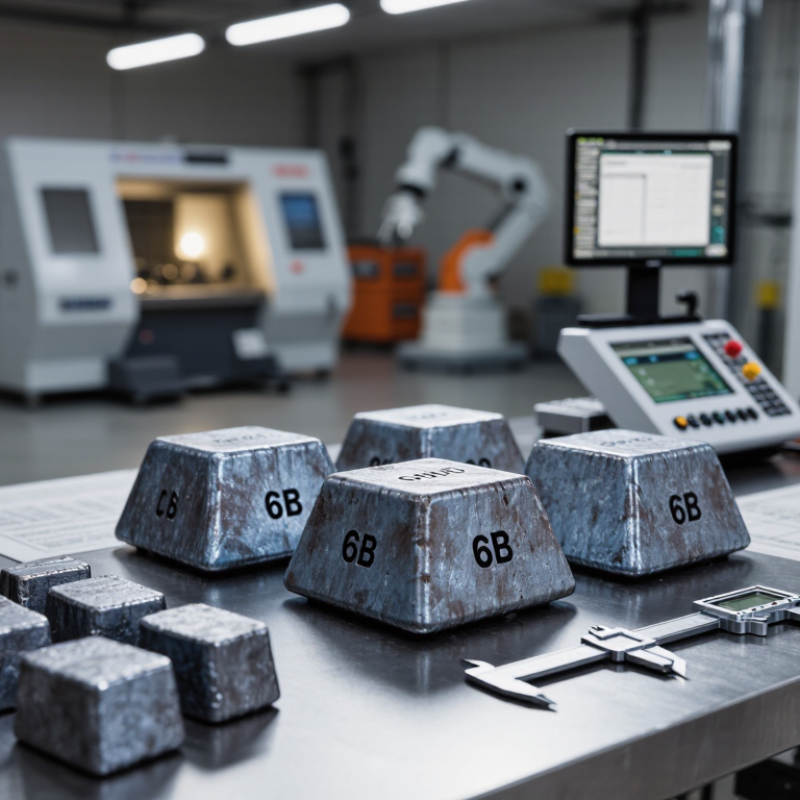
China Top 10 Cobalt Alloy 6B Suppliers for Global Buyers

Cobalt Alloy 6B: Typical 28–32% Chromium and 3.5–5.5% Tungsten

For global buyers comparing cobalt alloy 6B suppliers in China, chromium and tungsten ranges are useful starting points. Typical specifications contain 28–32% chromium and 3.5–5.5% tungsten, with cobalt forming the base. These elements support resistance to wear, heat, and many corrosive environments. Exact performance still depends on the full chemistry, processing route, and service conditions.

Small differences matter. A buyer reviewing a mill test certificate should compare reported values with the applicable specification, not just a product page. Ask how chemistry is verified and whether the certificate identifies the supplied heat or batch. Then check dimensions, surface condition, and requested product form. A polished sample can look excellent. It may not represent every production lot.

For demanding sliding or abrasive service, confirm hardness and wear data for the actual condition being offered. Chromium and tungsten alone cannot predict field life. This is easy to overlook. Discuss operating temperature, contact pressure, and the opposing material with the supplier. If a quotation omits these details, request clarification before comparing prices. Standards and published ranges can differ, so record the agreed limits in the purchase documents.

China’s Top 10 Alloy 6B Suppliers: Products, Locations, and Capabilities

China’s Alloy 6B supply landscape includes producers and service firms in coastal manufacturing clusters and northern industrial regions. Their offerings may include cast or wrought stock, cut-to-size plate, machined components, and hardfacing materials. Capabilities vary. Some firms focus on small, custom batches; others support repeat orders with machining and inspection records. Buyers should confirm chemistry, dimensions, heat-treatment condition, and whether testing applies to the delivered batch—not just a sample.

Location alone proves little. Ask for mill test certificates, material traceability, and documented inspection methods. Then compare lead times, export packing, and the supplier’s ability to explain cobalt-based alloy performance in wear and corrosion conditions. The USGS Mineral Commodity Summaries 2025 estimates 2024 global mine production at about 290,000 tonnes, with the Democratic Republic of the Congo contributing roughly 220,000 tonnes. This is cobalt feedstock data, not Alloy 6B output. It helps explain why raw-material sourcing and price exposure deserve attention. A limitation remains: public industry reports do not provide a reliable, audited ranking of China’s Alloy 6B suppliers. So a “top ten” shortlist should be treated as a buyer’s screening exercise, not a verified league table.

Comparing Suppliers by Typical 38–44 HRC Hardness and Material Traceability

For global buyers comparing cobalt alloy 6B suppliers, a quoted hardness of 38–44 HRC is a useful screening range, not a guarantee of equal service life. Ask whether the value applies to the supplied condition and whether it comes from a production-lot test. A polished coupon, a thick plate, and a machined valve part may not yield directly comparable readings. ASTM E18 defines Rockwell hardness testing; request the test location, method, and report date alongside the result. Small details matter.

Traceability deserves equal weight. The USGS Mineral Commodity Summaries 2024 estimated world cobalt mine production at 230,000 metric tons in 2023, underscoring the scale and complexity of the supply chain. That figure does not verify any individual alloy batch. Buyers should request a heat or lot number linked across the material test certificate, purchase order, and delivered part. Check that chemistry, hardness, and product form match the order. For metallic products, an EN 10204 type 3.1 inspection certificate can provide manufacturer-validated test results. Still, paperwork can be incomplete. Compare the certificate with permanent markings and packaging labels before acceptance, and clarify how the supplier handles retests or missing records.

China Top 10 Cobalt Alloy 6B Suppliers for Global Buyers

Benchmarking typical 38–44 HRC hardness and material traceability requirements for supplier evaluation.

The 38–44 HRC range represents a commonly cited typical hardness band for wrought cobalt alloy 6B. Traceability items are buyer verification checkpoints rather than claims about any individual supplier: heat or lot identification, chemical composition, mechanical testing, and applicable non-destructive examination records should be confirmed from controlled mill certificates and quality documents.

How to Verify Alloy 6B Chemistry, Heat Treatment, and Test Certificates

For global buyers, Alloy 6B verification starts with the heat number, not the supplier’s brochure. Alloy 6B is commonly identified as UNS R30016. Request the original mill test certificate and compare its chemistry with the stated ASTM or AMS specification. Check chromium, tungsten, carbon, nickel, iron, manganese, and silicon values. Do not accept “cobalt alloy” as sufficient identification.

The certificate should show sample location, testing method, laboratory accreditation, and inspector approval. A portable XRF scan is useful for chromium and tungsten, but it cannot reliably confirm carbon. Use optical emission testing or combustion analysis for carbon. The U.S. Geological Survey reported about 230,000 metric tons of mined cobalt production in 2023. That scale increases the need for traceable heat records and controlled sourcing. Small paperwork gaps matter.

Heat treatment requires more than one temperature on a certificate. Ask for furnace charts, soak time, atmosphere details, cooling practice, and furnace calibration records. Compare the chart with the applicable material specification. Verify hardness and tensile results against the purchase order. Independent retesting is sensible for critical parts. I have seen certificates with correct chemistry but incomplete heat-treatment evidence. That is not proof of failure, but it deserves questions. The Cobalt Institute’s 2024 market reporting shows battery applications consume roughly three-quarters of cobalt demand, making reliable industrial traceability increasingly important.

Global Buyer Checklist: Export Documents, Lead Times, and Quality Control

China Top 10 Cobalt Alloy 6B Suppliers for Global Buyers

Export readiness matters as much as machining skill when buying cobalt alloy 6B from China. The USGS Mineral Commodity Summaries 2024 estimated global cobalt mine production at 230,000 metric tons in 2023. This supply concentration makes traceability and documentation essential. Request a commercial invoice, packing list, bill of lading, certificate of origin, HS classification, and material test report. The test report should show chemistry, hardness, tensile properties, heat treatment, and batch numbers. Match every document to the same purchase order and lot.

Lead times require written controls. Ask for raw material availability, production days, inspection time, and shipping estimates separately. A realistic quotation should identify the Incoterm, port, packaging method, and delay procedure. The IEA’s Global Critical Minerals Outlook 2024 highlights continuing supply-chain risks for cobalt. Therefore, confirm whether the supplier can provide mill certificates and retain samples. Independent inspection can verify dimensions, surface condition, and alloy composition before shipment. Sampling alone is not perfect. Some defects appear after machining or service exposure.

Tips: Build a supplier scorecard covering documents, response time, quality records, and corrective actions. Ask for one recent anonymized inspection record. Compare promised lead times with three completed orders, not one attractive quotation. Include acceptance limits in the contract. ISO 9001 certification supports process discipline, but it does not guarantee each batch. Recheck critical evidence.