
X

Partner Login

Enter your username and password here on order to log in on the partner portal:

No registered partner yet?

Register now

Top Carbon Monoxide Detector Manufacturers Worldwide

Carbon monoxide remains a silent household danger because it has no reliable smell, color, or taste. A dependable Carbon Monoxide Detector can provide an early warning when fuel-burning appliances release this invisible gas. However, product quality varies across regions, applications, and installation environments. This guide examines leading Carbon Monoxide Detector manufacturers worldwide, focusing on sensing technology, alarm response, product durability, and practical user experience.

Performance matters.

Manufacturers serve homes, hotels, factories, vehicles, and emergency facilities. Their products may use electrochemical sensors, digital displays, battery backups, or connected monitoring systems. We consider how clearly alarms communicate danger, how easily devices can be tested, and how manufacturers support maintenance. Independent certifications and published technical data also deserve close attention. Yet certification alone cannot guarantee perfect protection. Installation height, ventilation, battery condition, and household maintenance still influence real-world safety. That point is sometimes underestimated.

The companies discussed here are evaluated through a professional and evidence-based lens. Product portfolios, engineering experience, global distribution, warranty policies, and user feedback help reveal their strengths. Where information changes quickly, readers should verify current specifications with official manufacturer sources. No ranking is permanent. Market leadership can shift as sensor designs improve and connected safety systems become more accessible. The best choice depends on the building, fuel sources, local requirements, and monitoring needs. A trusted manufacturer should offer more than a loud alarm; it should provide dependable sensing, clear guidance, and support that users can understand during a stressful moment.
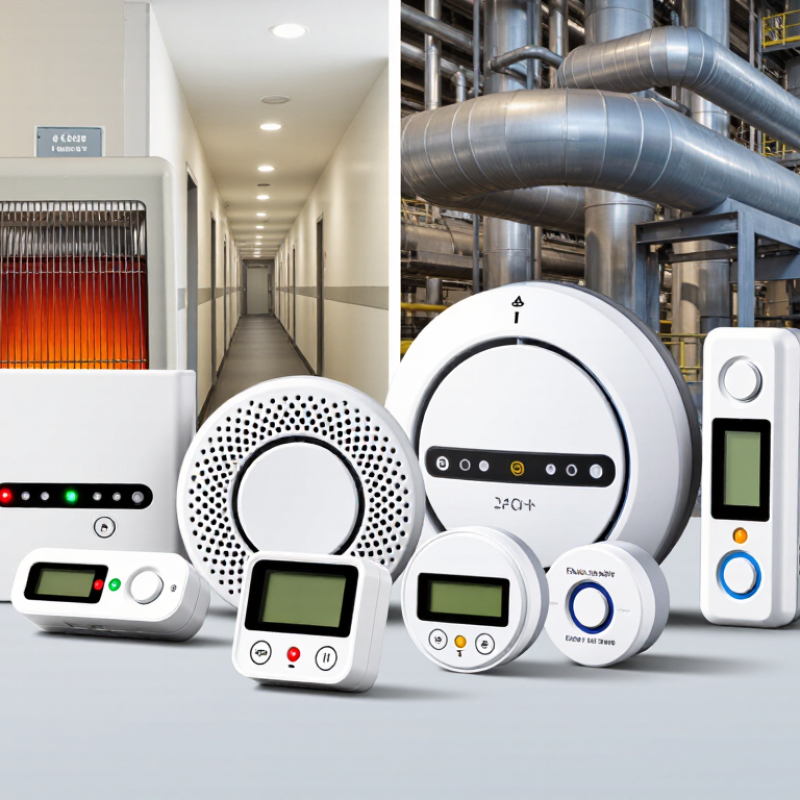
Top Carbon Monoxide Detector Manufacturers Worldwide

Carbon Monoxide Detector Manufacturers: Industry Overview and Market Scope

Top Carbon Monoxide Detector Manufacturers Worldwide

Carbon monoxide detector manufacturers serve residential, commercial, industrial, and transportation markets. Their industry scope extends beyond household alarms. Products must perform in bedrooms, boiler rooms, garages, hotels, and temporary workspaces. Each setting creates different sensing and maintenance demands.

Most manufacturers use electrochemical sensors because they offer strong sensitivity and stable readings. Some products add digital displays, wireless alerts, data logging, or automated testing. Manufacturing quality depends on sensor calibration, enclosure design, battery reliability, and alarm volume. A detector may look simple, but its internal testing process is not. Field evaluations often expose weaknesses that laboratory checks miss.

The worldwide market includes large production groups, specialist safety companies, and regional assembly facilities. Demand is rising with smart-building projects, rental housing upgrades, and workplace safety programs. Buyers should examine detection accuracy, response time, operating temperature, replacement intervals, and certification records. Independent testing adds useful confidence. It is not perfect, though. Market claims can be difficult to compare because testing methods and warranty terms vary. A low purchase price may hide frequent battery changes or limited service support. That matters.

Manufacturers are also developing connected detectors that send alerts to mobile devices and building management systems. These features improve oversight but introduce network and privacy concerns. Offline alarms remain essential when connectivity fails. Procurement teams need installation guidance, clear user instructions, and accessible replacement parts. Practical reliability often depends on these ordinary details, not only advanced sensor technology.

Key Technologies Used by Leading Carbon Monoxide Detector Brands

Top Carbon Monoxide Detector Manufacturers Worldwide

Leading carbon monoxide detector manufacturers increasingly use electrochemical sensing cells. These cells measure CO through a chemical reaction and usually provide better selectivity than basic semiconductor sensors. Many certified models follow UL 2034 or EN 50291 testing requirements. They also add temperature compensation, humidity correction, and automatic self-testing. These details matter in a cold garage or a damp utility room.

The U.S. Centers for Disease Control and Prevention reports that more than 400 Americans die from unintentional CO poisoning each year. Over 100,000 people receive emergency treatment. The figures remain disturbing.

Modern detectors also monitor sensor aging. An end-of-life alert can prevent silent protection failure. Some connected units send mobile warnings through wireless networks. Others record concentration trends for maintenance teams. However, connectivity is not always reliability. A dead battery or weak router can undermine a clever system. I have seen specifications emphasize smart functions while giving little space to alarm audibility. That deserves more scrutiny.

Tips: Choose a detector certified for your region. Check its sensor technology and replacement date. Install units near sleeping areas, but follow the manual’s placement guidance. Test them monthly. Do not treat a phone notification as the only warning. The International Association of Fire Chiefs recommends alarms on every level and outside sleeping areas. Small placement errors can matter.

Major Global Manufacturers and Their Product Portfolios

Top Carbon Monoxide Detector Manufacturers Worldwide

Major Global Manufacturers and Their Product Portfolios

Global carbon monoxide detector manufacturers typically serve homes, hotels, factories, and public buildings. Their portfolios often include plug-in alarms, battery-powered units, hardwired models, and connected detectors. Each category answers a different installation need. A rental apartment may require a compact plug-in device. A large facility may need networked monitoring with central alerts.

Most established manufacturers use electrochemical sensing technology because it offers strong sensitivity and stable readings. Some product lines add digital displays, peak-level memory, voice alerts, or smartphone notifications. Industrial portfolios may include portable monitors, fixed transmitters, and multi-gas instruments. These products support maintenance teams working near boilers, generators, furnaces, and enclosed equipment rooms.

Product quality depends on more than sensor type. Reliable manufacturers provide clear testing instructions, replacement guidance, and technical documentation. Regional certification also matters, since requirements differ across markets. From practical inspections, false alarms often relate to poor placement, depleted batteries, or ignored end-of-life warnings. That distinction is easy to miss.

No portfolio is perfect. Connected models can improve response, but they depend on power and network access. Basic alarms remain useful when installed correctly. Buyers should compare sensor life, alarm volume, operating temperature, warranty terms, and service support. The cheapest unit may not offer the clearest maintenance path. Small details matter.

Top Carbon Monoxide Detector Manufacturers Worldwide - Major Global Manufacturers and Their Product Portfolios

Portfolio Segment Primary Product Types Common Sensing Technology Typical Power Configuration Connectivity Options Relevant Standards and Certifications Typical End-Use Markets Global Market Coverage
Residential Entry-Level Standalone carbon monoxide alarms for bedrooms, hallways, apartments, and small homes Electrochemical carbon monoxide sensor Replaceable batteries or sealed long-life batteries Usually none; some models provide wireless interconnection UL 2034 in the United States and Canada; EN 50291 in Europe and other adopting markets Households, rental properties, student housing, and small accommodation facilities Widely available across North America, Europe, Asia-Pacific, and selected Middle Eastern markets
Residential Interconnected Interconnected alarms, combination smoke and carbon monoxide alarms, and whole-home warning systems Electrochemical CO sensing combined with photoelectric or ionization smoke sensing, depending on configuration AC mains power with battery backup; battery-only interconnected variants are also available Hardwired interconnect, proprietary wireless links, and selected smart-home protocols UL 2034, UL 217, NFPA 72 requirements where applicable, and EN 50291 for European products New residential construction, multi-unit housing, hotels, and larger private homes Strong presence in regulated housing markets with mandatory or recommended residential alarms
Smart and Connected Residential Connected CO alarms, app-enabled monitors, remote notification devices, and multi-sensor home safety products Electrochemical CO sensor with digital monitoring and self-diagnostic functions Battery-powered, AC-powered with backup, or low-voltage connected power Wi-Fi, Bluetooth, Zigbee, Z-Wave, or manufacturer-specific wireless networks Applicable regional residential alarm standards, radio regulations, and electrical safety requirements Smart homes, property management, assisted living, and remote vacation properties Most developed in digitally connected housing markets, with expanding adoption worldwide
Commercial Fire and Life Safety Addressable fire alarm system CO detectors, commercial combination detectors, and supervised alarm devices Electrochemical sensing integrated with commercial fire alarm electronics Supervised low-voltage power supplied by a fire alarm control panel, typically with standby batteries Addressable signaling loops, supervised circuits, and building management system interfaces UL 268 and UL 2034 where applicable; EN 54 series and local fire-system approvals in European markets Hotels, hospitals, offices, schools, retail buildings, and public facilities International distribution through fire-protection contractors, system integrators, and specialist distributors
Commercial and Industrial Fixed Gas Detection Fixed CO transmitters, point detectors, controller-based systems, and multi-gas detection platforms Electrochemical CO sensors; infrared and catalytic technologies may be included for other gases in multi-gas systems 24 V DC industrial power, loop-powered configurations, or AC-powered control panels with backup supply 4–20 mA, relays, Modbus, HART, industrial Ethernet, and centralized control panels IEC 60079-29-1, IEC 60079-29-2, IEC 62990-1, ATEX, IECEx, UL 2075, and regional hazardous-area approvals where required Parking garages, boiler rooms, warehouses, laboratories, utilities, and process industries Global project-based supply through industrial automation, safety, and environmental monitoring channels
Portable Personal Monitors Single-gas personal CO monitors, portable multi-gas detectors, and personal alarm instruments Electrochemical CO sensor, commonly combined with sensors for oxygen, hydrogen sulfide, combustible gases, or other hazards Replaceable or rechargeable batteries with user-replaceable sensor options on selected designs Local audible, visual, and vibrating alarms; USB, Bluetooth, or docking-station data transfer on advanced models IEC 60079-29-1, IEC 62990-1, ATEX, IECEx, and occupational safety approvals applicable to the intended environment Confined-space entry, maintenance, utilities, emergency response, mining, and industrial inspections Sold internationally through occupational safety suppliers and industrial distribution networks
Transport and Marine Applications Vehicle cabin alarms, recreational-vehicle detectors, marine CO alarms, and engine-room monitoring systems Electrochemical CO sensing designed for vibration, temperature variation, and mobile environments Battery-powered, 12/24 V DC vehicle supply, or marine electrical systems with backup power Standalone alarms, relay outputs, NMEA-compatible integration, or vehicle monitoring interfaces Marine, recreational-vehicle, transportation, and applicable electrical safety requirements vary by jurisdiction Boats, recreational vehicles, buses, service vehicles, and mobile accommodation units Distributed through marine, automotive, recreational-vehicle, and specialty safety channels
Healthcare and Institutional Monitoring CO monitoring units, room-based alarms, portable survey instruments, and integration-ready safety systems Electrochemical sensing with continuous monitoring, event logging, and maintenance diagnostics AC mains, rechargeable battery backup, or facility low-voltage power Nurse-call interfaces, building management systems, relay contacts, Ethernet, or wireless reporting Applicable residential, commercial fire, electrical safety, medical-facility, and local building-code requirements Hospitals, care homes, laboratories, public housing, and institutional buildings Primarily supplied through specialist safety, healthcare, facilities-management, and building-system integrators

Safety Standards and Certifications for Carbon Monoxide Detectors

Carbon monoxide detectors are safety devices, not ordinary household gadgets. Their performance depends on recognized standards, accurate testing, and suitable installation. In the United States, buyers commonly look for compliance with UL 2034. European markets often reference EN 50291, while Australia and New Zealand use AS 3786. Requirements differ by region, so one certification may not satisfy every local authority.

Look for a clear certification mark, model number, production information, and testing laboratory details. An accredited laboratory should assess alarm timing, sensor accuracy, battery behavior, and resistance to environmental changes. Practical inspections also matter. The detector should be placed near sleeping areas, away from cooking fumes, vents, and excessive humidity. Follow the installation instructions carefully.

Test it regularly.

A test button checks the alarm circuit, not always the sensor’s full accuracy. Replace batteries as directed, and replace the detector when its service life ends. Some units provide digital readings, but a displayed number does not automatically prove reliable performance. Verification through the certification database can prevent costly mistakes. Standards are valuable, yet labels can be misunderstood. Even experienced installers may overlook regional requirements or an expired product. Safety improves when certification, maintenance, and placement are considered together.

How to Compare Carbon Monoxide Detector Manufacturers Worldwide

Comparing carbon monoxide detector manufacturers worldwide requires more than checking price or alarm volume. Start with certification evidence. Look for compliance with UL 2034, EN 50291, or equivalent national standards. These standards assess alarm thresholds, response timing, sensor behavior, and resistance to environmental changes. Ask for current test reports, not only certification logos. Independent laboratory records are more reliable.

Sensor technology deserves close attention. Electrochemical sensors generally provide strong sensitivity and selectivity for household use. Compare sensor lifespan, calibration requirements, operating temperature, and humidity tolerance.

The U.S. Centers for Disease Control and Prevention reports that carbon monoxide causes more than 400 unintentional deaths annually in the United States. It also records over 100,000 emergency department visits. These figures make maintenance evidence important, not decorative.

Evaluate the manufacturer’s field experience. Check recall history, production traceability, warranty handling, and replacement guidance. A useful comparison includes alarm response at low concentrations, battery endurance, audible volume, display readability, and end-of-life warnings. The World Health Organization identifies carbon monoxide poisoning as a significant global public-health concern, although country reporting remains uneven. That limitation matters. A polished brochure cannot replace transparent data. Some manufacturers publish detailed test conditions; others provide vague claims. I would treat missing evidence as a weakness, even when the product looks sophisticated. Human factors matter too. A detector mounted near a bedroom should be understandable at 3 a.m., not merely technically impressive.