
X

Partner Login

Enter your username and password here on order to log in on the partner portal:

No registered partner yet?

Register now

Top Maize Flour Mill Machine for Global Buyers

Global maize demand is reshaping equipment decisions. The USDA Foreign Agricultural Service estimated worldwide corn production at about 1.2 billion metric tons in 2023/24. Much of this grain enters food, feed, and industrial supply chains. Milling quality therefore affects more than flour output.

A reliable Maize Flour Mill Machine must handle local maize differences. Kernel hardness, moisture, storage conditions, and contamination risks can change performance. Buyers should examine capacity, extraction rate, power consumption, dust control, stainless-steel contact parts, and cleaning access. These details matter on a real factory floor. Flour should leave the sieve cool, fine, and consistent.

Dr. Peter Fellows, a recognized food-processing specialist, describes processing as the deliberate transformation of raw materials into safe, edible products. That principle fits maize milling well. A machine is not truly efficient if it produces volume but weak food safety or unstable flour quality.

The FAO highlights food safety, nutrition, and resilient food systems as connected priorities. Energy efficiency is also becoming harder to ignore. Some suppliers publish impressive capacity figures, yet omit operating conditions. That is a warning sign.

The best machine depends on the buyer’s maize, market, labor skills, and service access. Not every large mill is the right mill. A smaller plant may need flexibility more than maximum throughput. Buyers should request trial results, energy data, spare-parts lists, and customer references before purchasing. Performance on paper can disappoint. Careful verification remains essential.
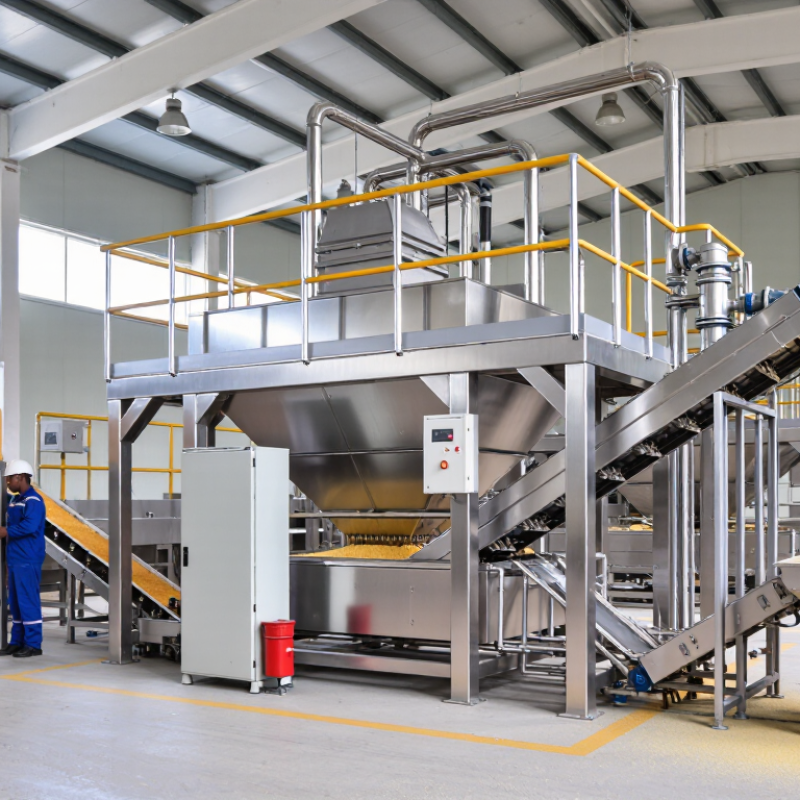
Top Maize Flour Mill Machine for Global Buyers

What Is a Maize Flour Mill Machine?

A maize flour mill machine is equipment designed to turn cleaned maize kernels into edible flour. It combines feeding, grinding, sieving, and sometimes dehulling in one processing line. The basic process is practical: maize enters through a hopper, moves into a grinding chamber, and leaves as fine or medium flour. Rotating plates, rollers, or hammer components reduce the kernels into smaller particles. A sieve then separates flour from coarse material. Some systems return larger particles for another pass.

Small details matter.

A reliable machine needs a stable frame, suitable motor power, controlled feeding, and easy-to-clean contact surfaces. In daily mill work, operators must check maize moisture before grinding. Excessively dry kernels may create dust and uneven flour. Wet kernels can block the chamber and reduce output. Capacity also depends on kernel variety, sieve size, and working hours. Therefore, a stated hourly capacity should not be accepted without conditions. No machine performs perfectly in every environment.

I have seen buyers focus on motor size while overlooking dust control and spare sieve access. That mistake can increase maintenance time. For global buyers, voltage compatibility, operator safety, noise, cleaning access, and local technical support deserve equal attention. A good maize flour mill machine is not merely a grinder; it is a coordinated system for producing consistent flour.

How Maize Flour Mill Machines Work

Top Maize Flour Mill Machine for Global Buyers

How Maize Flour Mill Machines Work

Maize flour milling starts with cleaning. Screens remove stones, dust, and oversized particles. Aspirators then separate lighter husks from heavier kernels. This step protects the grinding chamber and improves food safety. USDA’s 2024/25 estimates place global maize production above 1.2 billion metric tons, creating strong demand for efficient processing equipment.

Clean kernels usually pass through conditioning before milling. Water adjusts kernel moisture, often within a controlled range near 14–16%. The correct level helps loosen the bran and protects the endosperm. Degermination removes part of the germ, which can reduce oil-related rancidity during storage. However, excessive removal lowers yield. That trade-off deserves attention.

Grinding may use plates, rollers, or hammer systems. The machine choice depends on flour texture, capacity, and energy limits. Sieves classify particles after grinding. Oversized material returns for another pass. Fine flour exits through a sealed outlet, while dust-control equipment improves the working environment. The International Grains Council regularly tracks global grain production, trade, and consumption, showing why reliable throughput matters for export-oriented processors. In practice, results are rarely perfect. Kernel variety, temperature, and operator adjustment can change flour color and fineness. Trial milling remains essential.

Top Maize Flour Mill Machine for Global Buyers: How Maize Flour Mill Machines Work

Typical dry-milling output distribution from cleaned maize

A maize flour mill normally cleans and conditions the grain, removes part of the bran and germ, separates the endosperm, and reduces it into flour through roller or hammer milling. In a typical dry-milling process, approximately 65% of the cleaned maize becomes flour, while grits, germ, bran, and process losses make up the remaining output. Actual results vary with maize variety, moisture content, machine configuration, and sieve settings.

Key Types of Maize Flour Mill Machines

Top Maize Flour Mill Machine for Global Buyers

Key Types of Maize Flour Mill Machines

Choosing a maize flour mill machine starts with the intended product, not the machine’s appearance. FAOSTAT data indicates global maize production exceeded 1.2 billion metric tonnes in recent years. This scale increases demand for stable, efficient milling systems. Hammer mills use rotating hammers to break cleaned maize into flour. They suit small and medium plants, especially where simple maintenance matters. Roller mills offer more controlled particle sizes and lower heat generation. They fit commercial plants producing consistent flour for retail or industrial use.

Disc or plate mills remain practical for rural processors and compact facilities. Their structure is straightforward, but wear can change flour texture. Degermination systems remove part of the germ before milling. This can improve storage stability, although it may reduce some nutrients. USDA grain market reports regularly highlight maize’s importance in global food and feed supply. Still, production figures do not guarantee suitable machinery. Moisture, electricity quality, cleaning capacity, and local labor often decide real performance.

Tips: Ask suppliers for test-milling results using your maize. Check flour temperature, extraction rate, screen size, and power consumption. A 2023 energy-efficiency review by the International Energy Agency stresses that efficient motors and operating practices can significantly reduce processing costs. Do not trust capacity claims alone. A machine rated for ten tonnes daily may perform poorly with damp grain, irregular feeding, or weak voltage. Small details matter. I would also budget for spare screens and bearings; ignoring them is an easy mistake.

Top Maize Flour Mill Machine for Global Buyers - Key Types of Maize Flour Mill Machines

Machine Type Typical Capacity Main Drive Power Typical Flour Fineness Best-Suited Application Key Advantages Important Considerations
Hammer Mill 100–2,000 kg/h 5.5–75 kW 0.5–5 mm, depending on screen size Small farms, feed production, and basic maize meal processing Simple construction, flexible particle-size control, and relatively low initial cost Produces more heat and bran fines; screening may be needed for uniform flour
Plate or Disc Mill 50–1,000 kg/h 3–30 kW 0.3–2 mm, adjustable by disc clearance Household, community, and small commercial milling Compact footprint, straightforward operation, and suitable for intermittent production Grinding discs wear over time and require regular gap adjustment
Roller Mill 500–10,000 kg/h 15–160 kW per grinding section Approximately 150–500 μm after staged milling and sifting Medium- and large-scale food-grade maize flour plants Consistent particle size, efficient staged grinding, and better control of bran separation Higher investment, larger installation area, and need for cleaning and sifting equipment
Pin Mill 100–2,500 kg/h 11–90 kW Approximately 100–800 μm Fine maize flour, specialty food ingredients, and secondary grinding Fine particle production and relatively uniform milling performance Sensitive to foreign materials; dust extraction and temperature control are important
Stone Mill 30–500 kg/h 2.2–22 kW 0.3–1.5 mm, depending on stone gap and screening Traditional whole-maize flour and small-batch specialty products Traditional milling method, low throughput, and suitable for artisan production Lower capacity and slower operation; stones require inspection and dressing
Compact Maize Flour Mill Line 300–2,000 kg/h 45–250 kW total installed power Approximately 150–500 μm after milling and sifting Small and medium commercial processors requiring an integrated workflow Combines cleaning, degermination, milling, sifting, and packing in one coordinated system Requires stable power, adequate floor space, operator training, and routine maintenance
Industrial Maize Milling Plant 2–30 tonnes/h 150–1,500 kW total installed power Approximately 100–500 μm, controlled through multiple passages Large-scale production of refined maize flour, grits, meal, and by-products High throughput, automated process control, product separation, and continuous operation Substantial capital cost, engineering requirements, utilities, and food-safety management

Note: Capacity, power consumption, and flour fineness vary with maize moisture, kernel hardness, feed cleaning, screen configuration, milling rate, and the required product specification.

How to Choose a Machine for Global Production Needs

Top Maize Flour Mill Machine for Global Buyers

Choosing a maize flour mill for global production needs starts with the raw material, not the brochure. FAOSTAT reported approximately 1.2 billion tonnes of maize production worldwide in 2022. This scale creates uneven grain quality, moisture levels, and storage conditions. A suitable machine should handle local maize varieties, remove stones efficiently, and maintain stable flour fineness. Ask for measured tests using your own grain.

Capacity must match real demand. The International Grains Council’s 2024/25 market outlook placed global maize production above 1.2 billion tonnes, but regional supply remains unpredictable. Select equipment with controlled feeding and adjustable rollers or milling plates. A line rated at 10 tonnes hourly may deliver less with wet grain, unstable power, or frequent cleaning. Numbers on paper can mislead. Leave practical capacity below the advertised maximum.

Check energy use, hygiene access, spare-part availability, and operator training before purchasing. The Codex Alimentarius General Principles of Food Hygiene emphasizes contamination control and cleanable food-contact surfaces. Stainless steel contact areas, enclosed conveyors, dust extraction, and easy inspection points reduce operational risk. Test the machine for flour temperature, yield, particle size, noise, and power consumption. Keep records. One overlooked detail is voltage compatibility; a technically excellent mill may fail in a remote plant without reliable electrical support.

Installation, Operation, and Maintenance Requirements

Top Maize Flour Mill Machine for Global Buyers

Installation, Operation, and Maintenance Requirements

Global maize processing needs dependable equipment. The USDA’s 2024/25 WASDE report forecast world corn production at roughly 1.2 billion metric tons. This scale makes correct installation and disciplined operation essential. Set the mill on a level, vibration-resistant foundation. Check shaft alignment before connecting the motor. Install reliable grounding, overload protection, and dust extraction according to local electrical and workplace rules. Incorrect alignment can create heat, noise, and premature bearing failure.

Run the machine empty during commissioning. Listen for unusual vibration. Feed cleaned maize gradually, and record output, temperature, and flour particle size. Moisture changes can affect throughput and sieve performance. A polished commissioning sheet is not proof of stable quality. Operators still need practical judgment. The Codex General Principles of Food Hygiene, CXC 1-1969, supports hygienic design, cleaning, and contamination control. Remove residual flour from contact surfaces after each shift. Inspect screens, belts, bearings, magnets, and aspiration channels on a planned schedule. The IEA’s Energy Efficiency 2023 report states that industry used about 37% of global final energy in 2022, so efficient motors and reduced idle running deserve attention.

Tips: Keep a daily log with amperage, moisture, output, and faults. Clean dusty areas before maintenance begins. Replace damaged screens early. Do not trust appearance alone; hidden dust can remain inside guards. Review the maintenance plan every month, because real production rarely follows the manual perfectly.