
Partner Login
Enter your username and password here on order to log in on the partner portal:
No registered partner yet?
Register nowChoosing the right Organic Fertilizer Processing Plant manufacturer affects product quality, operating costs, and long-term farm performance. This guide examines ten established manufacturers serving compost, manure, and organic fertilizer producers worldwide.
The evaluation considers engineering experience, process design, equipment durability, automation, after-sales support, and documented customer results. It also reviews complete production lines, including crushing, mixing, granulation, drying, cooling, screening, and packaging. These details matter when a plant handles wet poultry manure in the morning and dusty compost in the afternoon.
Sir Albert Howard, a pioneer of modern organic agriculture, wrote, “The compost heap is the factory of soil fertility.” His principle remains relevant. A reliable plant should protect nutrient value while producing consistent granules, manageable moisture, and stable output.
Real factories are rarely perfect. Some manufacturers offer excellent machinery but weaker technical support. Others provide strong service but limited customization. That difference can become expensive after installation. Buyers should request process data, material testing, energy estimates, spare-parts plans, and verified reference projects.
Look closely.
A trustworthy supplier explains limitations instead of promising unrealistic capacity. It should also discuss local feedstocks, seasonal moisture changes, dust control, worker safety, and compliant waste handling. The companies featured here are not presented as identical choices. Each has specific strengths, suitable applications, and areas requiring careful review. This practical comparison helps investors, agricultural businesses, and project engineers make better decisions before selecting an Organic Fertilizer Processing Plant partner.
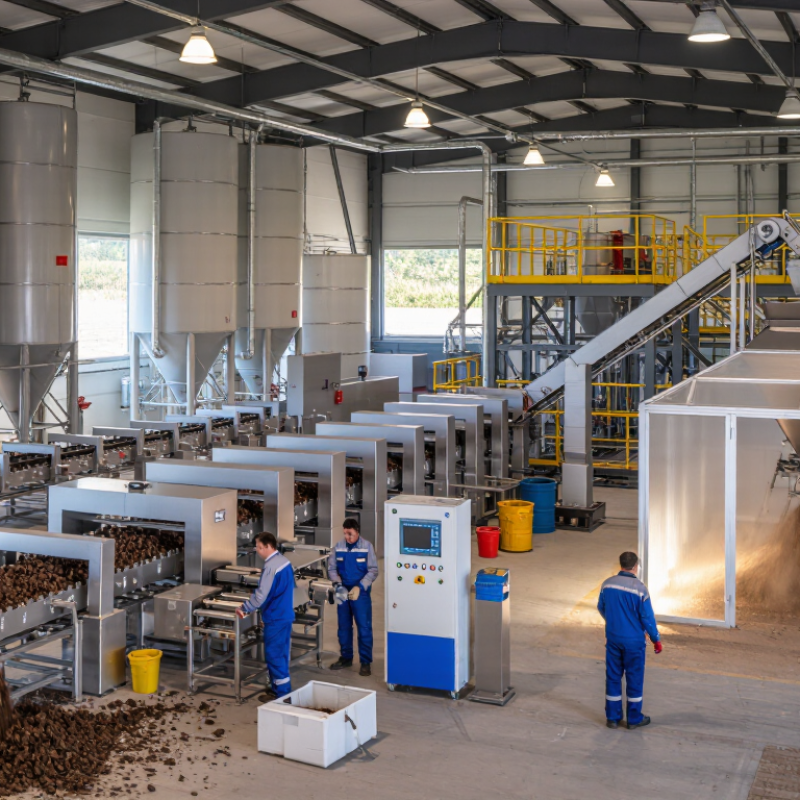
An organic fertilizer processing plant converts biodegradable materials into stable, usable soil amendments. Typical feedstocks include livestock manure, crop residues, compost, and food-processing by-products. The process often begins with receiving, sorting, and moisture testing. It may continue through composting, crushing, mixing, granulation, drying, cooling, screening, and packaging. Not every plant uses every stage. Feedstock changes the design.
The plant’s scope also includes odor control, dust collection, drainage, storage, and quality testing. A reliable facility should manage moisture, carbon-to-nitrogen balance, particle size, and pathogen reduction. In practical site inspections, these details often reveal more than attractive equipment photos. A clean layout helps operators separate raw materials from finished products. Good ventilation matters. So does safe maintenance access.
When comparing the top 10 manufacturers, buyers should examine process experience, engineering documents, commissioning support, and spare-parts planning. Ask for test results using similar feedstock, not generic samples. Production capacity should be verified under realistic moisture conditions. A stated output may fall when materials are wet or inconsistent. That is easy to overlook. Even experienced engineers can misjudge seasonal feedstock changes. A careful manufacturer explains these limits openly and adjusts the design accordingly.
The top 10 organic fertilizer processing plant manufacturers should be evaluated through evidence, not marketing claims. A practical review begins with feedstock traceability, process control, and product consistency. The International Fertilizer Association’s Fertilizer Outlook 2023–2027 projects global nutrient demand to approach 200 million tonnes annually, increasing pressure for dependable processing capacity. Manufacturers should show laboratory results for nitrogen, phosphorus, potassium, moisture, and organic matter.
Plant performance also requires direct verification. Auditors can inspect fermentation tunnels, granulation lines, dust collectors, conveyors, and finished-product storage. The European Commission’s Best Available Techniques Reference Document for Waste Treatment emphasizes emission control, odor management, energy efficiency, and wastewater handling. These points deserve measurable evidence, such as filter replacement records, electricity use per tonne, and documented odor complaints. Small details matter.
Reliability depends on more than equipment speed. A serious evaluation checks commissioning records, spare-parts availability, operator training, warranty response, and customer references from comparable climates. Trial runs should test wet manure, fibrous residues, and uneven feedstock, because real materials rarely behave perfectly. I would also compare total ownership cost rather than purchase price alone. Some assessments remain incomplete when they ignore seasonal downtime or local maintenance skills. That weakness should be disclosed, not hidden. Independent certification, calibrated testing, and a transparent scoring method help separate experienced manufacturers from impressive-looking suppliers.
The ten manufacturers profiled here represent different strengths in organic fertilizer production. One specializes in compost turners for large windrows and uneven farm waste. Another designs enclosed fermentation lines with temperature probes and odor-control chambers. A third focuses on manure drying, using adjustable airflow to protect nutrient quality. Some manufacturers build compact lines for cooperatives, while others engineer high-capacity systems for municipal composting centers.
Several profiles stand out for practical equipment details. One manufacturer combines shredders, mixers, granulators, screens, and automatic bagging units in a continuous layout. Another develops vermicompost processing equipment with gentle feeding systems. A specialist in bio-organic fertilizer adds microbial inoculation tanks and controlled curing rooms. Two manufacturers emphasize low-energy rotary dryers and heat recovery. The final profile offers modular plants, allowing operators to expand production without rebuilding the entire workshop.
Reliable evaluation requires more than impressive brochures. Experienced buyers should inspect material samples, motor protection, spare-part access, and commissioning support. A serious manufacturer explains moisture limits and expected maintenance intervals clearly. Factory trials can reveal problems that drawings hide, especially dust leakage or uneven granule size. No plant is perfect. Some advanced lines cost more than smaller producers can justify, while budget systems may demand extra manual labor. That trade-off deserves honest attention. Operators should compare verified test data, worker safety features, and after-sales response before selecting a plant.
Top 10 Organic Fertilizer Processing Plant Manufacturers
When evaluating the top ten organic fertilizer processing plant manufacturers, examine their complete technology chain. A reliable supplier should support raw material reception, crushing, screening, mixing, granulation, drying, cooling, coating, and packaging. Each stage affects nutrient consistency and final product quality.
Granulation systems may use drum, disc, or extrusion designs. Drum granulators suit continuous production and handle varied organic materials. Disc granulators offer adjustable pellet size through pan angle and rotation speed. Extrusion equipment can form dense particles with limited moisture. The right choice depends on feedstock, capacity, and energy costs.
Moisture matters. Dryers need accurate temperature control to protect sensitive nutrients and reduce sticking. Rotary screens remove oversized particles, while dust collectors improve the working environment. Automatic weighing systems also reduce packaging errors. Manufacturers with practical experience should provide process testing, equipment layouts, installation guidance, and operator training. They should explain maintenance intervals, spare-part access, and expected electricity consumption.
A good quotation is not enough. Ask for material trials and measurable output data. I would also inspect weld quality, bearing protection, and cleaning access. These details are easy to overlook. Some systems appear efficient on paper but struggle with fibrous feedstock or unstable moisture. That gap matters. Reliable technical support should address such problems honestly, instead of promising perfect performance.
Choosing an organic fertilizer processing plant requires more than comparing prices. Feedstock consistency comes first. A reliable manufacturer should document source, moisture, carbon-to-nitrogen ratio, and contamination controls for every batch. The European Commission’s End-of-Waste criteria emphasize traceability and contaminant limits, which makes laboratory records essential. Ask for recent test reports, not polished promises.
Processing design also deserves close inspection. The FAO estimates that agriculture produced about 4.7 billion tonnes of primary crop products in 2022. Even a small plant must manage seasonal volume changes. Look for controlled composting, stable aeration, temperature monitoring, and screening accuracy. The U.S. EPA identifies composting as a practical method for diverting organic waste from landfills. However, “green” equipment is not automatically efficient. Request measured electricity use, water consumption, production yield, and odor-control performance.
Service quality often separates a useful supplier from an expensive mistake. The manufacturer should offer commissioning, operator training, spare-parts planning, and clear maintenance intervals. Check whether its pilot tests use your actual feedstock. That detail matters. A machine performing well with dry poultry litter may struggle with wet food residues. Independent inspections and customer references strengthen reliability. Still, no scorecard is perfect. Leave room for failed trials, underestimated labor, and changing local regulations before signing a contract.
| Rank | Manufacturer Profile | Typical Processing Line | Recommended Capacity | Raw Material Compatibility | Composting / Fermentation Control | Final Moisture Range | Final Particle Size | Quality & Safety Documentation | Automation Level | After-Sales Support | Selection Score |
|---|---|---|---|---|---|---|---|---|---|---|---|
| 1 | Profile 01 | Composting, crushing, screening, mixing, granulation, drying, cooling and packaging | 5–20 t/h | Animal manure, poultry litter, crop residues and municipal green waste | Temperature, oxygen and moisture monitoring with controlled aeration | 10–15% | 2–5 mm granules; adjustable screening | Process drawings, equipment manuals, factory test records and material certificates | High | Remote commissioning, operator training and spare-parts planning | 9.4 / 10 |
| 2 | Profile 02 | Windrow composting, semi-wet crushing, blending, disc granulation and screening | 3–15 t/h | Composted manure, digestate solids, peat substitutes and plant-based residues | Recipe-based moisture adjustment and batch temperature records | 12–18% | 2–6 mm granules | Electrical schematics, installation drawings and routine inspection checklist | Medium–High | Installation supervision, training and telephone technical support | 9.1 / 10 |
| 3 | Profile 03 | In-vessel fermentation, dewatering, low-temperature drying, granulation and packing | 2–10 t/h | Food-processing waste, digestate, manure and high-moisture organic feedstock | Closed-vessel control with temperature, humidity and exhaust management | 8–14% | 1–4 mm granules or powder | Odor-control specifications, commissioning records and operating procedures | High | Process optimization, preventive maintenance guidance and online support | 8.9 / 10 |
| 4 | Profile 04 | Composting, pan granulation, rotary drying, cooling, screening and bulk loading | 8–30 t/h | Large-volume manure compost, agricultural residues and organic amendments | Continuous temperature logging with adjustable air-distribution system | 10–16% | 2–5 mm granules; recycle loop available | Layout drawings, utility list, inspection plans and commissioning report | High | On-site installation support and recommended spare inventory | 8.8 / 10 |
| 5 | Profile 05 | Organic waste shredding, aerobic composting, roller granulation and screening | 1–8 t/h | Compost, manure, sludge-based organic material and agricultural by-products | Manual or automatic monitoring depending on project configuration | 12–20% | 3–8 mm granules | Basic technical documentation, equipment specifications and safety instructions | Medium | Video guidance, commissioning assistance and consumable-parts support | 8.5 / 10 |
| 6 | Profile 06 | Fermentation, pulverizing, mixing, low-temperature drying and powder packaging | 1–6 t/h | Fine compost, vermicompost, poultry manure and mineral-organic blends | Batch monitoring with moisture correction during mixing | 8–15% | 80–120 mesh powder or 2–4 mm granules | Equipment manuals, control-panel documentation and acceptance checklist | Medium–High | Operator training, remote troubleshooting and spare-parts list | 8.3 / 10 |
| 7 | Profile 07 | Compost screening, blending, extrusion granulation and automatic bagging | 2–12 t/h | Dry compost, humic materials, biochar blends and organic-mineral formulations | Recipe management with in-line moisture and feed-rate adjustment | 10–15% | 2–5 mm compact granules | Batch traceability forms, machine manuals and quality-control templates | High | Remote software support, training and scheduled maintenance guidance | 8.2 / 10 |
| 8 | Profile 08 | Organic material crushing, mixing, chain-belt granulation and rotary screening | 2–10 t/h | Well-composted manure, plant residues and dry organic fertilizer blends | Basic temperature checks and operator-controlled moisture addition | 13–20% | 3–6 mm granules | General arrangement drawings, operating manual and commissioning checklist | Medium | Installation advice, spare-parts recommendations and remote support | 7.9 / 10 |
| 9 | Profile 09 | Small-scale composting, mixing, flat-die granulation and semi-automatic packing | 0.5–3 t/h | Farm manure, compost, poultry litter and small-volume organic residues | Manual process control with optional temperature and moisture sensors | 12–20% | 3–8 mm granules | Basic manuals, electrical diagrams and operator safety instructions | Basic–Medium | Remote installation support and consumable-parts guidance | 7.6 / 10 |
| 10 | Profile 10 | Compost refining, powder blending, optional granulation and manual bag filling | 0.3–2 t/h | Finished compost, vermicompost, humic powder and dry organic amendments | Operator-controlled batch processing with basic moisture checks | 10–18% | 60–100 mesh powder or 2–5 mm granules | Product specifications, operating instructions and basic acceptance records | Basic | Start-up guidance, online troubleshooting and standard spare-parts support | 7.3 / 10 |
Evaluation note: Capacity, moisture and particle-size figures are typical engineering ranges for comparable organic fertilizer processing systems. Actual performance should be confirmed through feedstock testing, a process guarantee and a documented factory acceptance test.