China Top Polymer Heat Exchanger Manufacturers?
China has become an important source of polymer heat-transfer equipment, but “top manufacturer” can mean different things. One buyer may prioritize corrosion resistance; another needs compact dimensions, stable output, or straightforward maintenance. This guide examines Chinese manufacturers through practical questions: Which polymers do they process? What operating temperatures and pressures do their designs support? Can they provide material data, performance calculations, and clear installation guidance? The answers matter more than a polished product photograph.
A Polymer Heat Exchanger should be assessed against the actual fluid, duty cycle, and cleaning method—not chosen by material name alone. Sadik Kakaç is a recognized heat-transfer scholar whose work provides useful context for evaluating exchanger design. However, no verifiable, attributable statement from him on polymer heat exchangers was supplied for this introduction, so I will not invent a quotation. That caution reflects a real sourcing issue: supplier claims need evidence. Look for drawings, documented test conditions, reference projects, and details about connections and replacement parts. Ask how performance changes as deposits build up. Small details matter. This comparison aims to help readers identify manufacturers worth evaluating, while recognizing that product suitability depends on independent technical review. China’s supplier landscape is broad, and a company’s capabilities can vary by product line. Treat rankings as a starting point, not proof of fit.
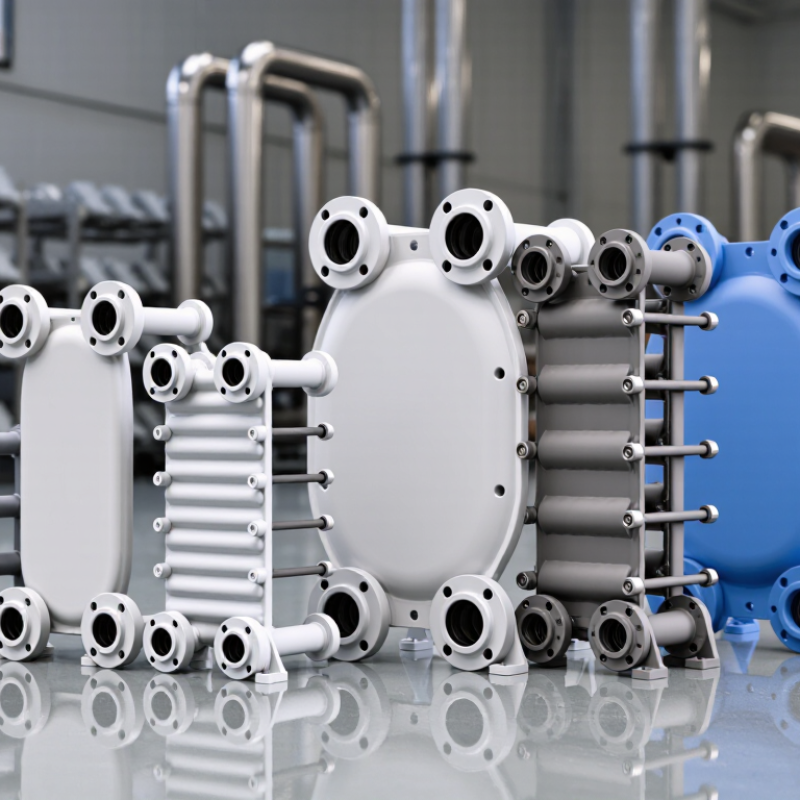
What Is a Polymer Heat Exchanger?
A polymer heat exchanger transfers heat between two fluids through a polymer wall, keeping the streams separate. Unlike a metal unit, it may use polypropylene, PVDF, or fluoropolymers, depending on the fluid and operating conditions. Heat crosses the wall, but usually more slowly than through metal. That trade-off matters.
Designers can compensate with thin channels, greater surface area, or compact tube bundles. For example, a unit might cool an acidic rinse stream while warming clean process water. The fluids should not mix. Material compatibility, temperature limits, pressure ratings, and permeation behavior all need careful review. A polymer can resist a chemical at room temperature but perform differently when concentration or exposure time changes. Not always.
Datasheets alone may not capture the whole picture. Operators should compare actual fluid composition, startup cycles, fouling risks, cleaning methods, and flow rates with test data. Polymer equipment may reduce corrosion-related maintenance, but it is not automatically cheaper or more efficient for every application. I would treat claims of universal compatibility cautiously; real process conditions can be messier than a specification sheet suggests.
China Top Polymer Heat Exchanger Manufacturers? - What Is a Polymer Heat Exchanger? | Polymer Material | Typical Thermal Conductivity
(W/m·K) | Indicative Continuous-Use Temperature | Common Heat Exchanger Formats | Typical Application Fit | Key Design Consideration |
| High-density polyethylene (HDPE) | 0.40–0.50 | Approximately 60–80°C | Coils, tubes, and modular tube bundles | Low-temperature water systems and selected dilute chemical services | Temperature, pressure, and chemical resistance are grade- and design-dependent; verify compatibility with the process fluid. |
| Polypropylene (PP) | 0.10–0.22 | Approximately 80–100°C | Welded plate, tube, and block-style units | Corrosive aqueous services, including many acid and alkali applications | Pressure capability generally decreases as operating temperature rises; check creep and joint design. |
| Polyvinylidene fluoride (PVDF) | 0.17–0.19 | Approximately 120–140°C | Tube bundles, coils, and fabricated plate or block units | Higher-temperature chemical processes where broad chemical resistance is required | Confirm resistance for the exact chemical concentration, temperature, and exposure conditions. |
| Polytetrafluoroethylene (PTFE) | Approximately 0.25 | Up to approximately 260°C for some grades | Small-bore tubing, coils, and lined or modular designs | Highly corrosive fluids and services requiring broad chemical inertness | Low stiffness and creep can limit pressure performance; support, sealing, and construction method are important. |
| Perfluoroalkoxy alkane (PFA) | Approximately 0.19–0.25 | Up to approximately 260°C for some grades | Coils, tubing, and specialized modular assemblies | High-purity or highly corrosive applications requiring fluoropolymer compatibility | Confirm the pressure-temperature rating and fabrication limits of the specific exchanger design. |
A polymer heat exchanger transfers heat through polymer walls, commonly in tubes, plates, coils, or modular blocks. Values shown are typical material-level ranges, not guaranteed equipment ratings; actual limits depend on polymer grade, geometry, wall thickness, joints, pressure, and fluid chemistry.
How Polymer Heat Exchangers Work and What Materials They Use
A polymer heat exchanger transfers heat across a solid wall while keeping two fluid streams apart. Hot process liquid flows through narrow channels; cooler liquid passes along the opposite side. Heat moves through the wall and into the cooler stream. ASHRAE Handbook—Fundamentals describes this as conduction through the separating surface combined with convection from each flowing fluid. In practice, channel shape and flow rate matter: a thin wall can improve heat transfer, but excessive pressure or chemical attack may shorten service life. The design trade-off is easy to underestimate.
Material choice depends on temperature, chemistry, pressure, and cleaning needs. Polypropylene is common for many corrosive, moderate-temperature duties; PVDF can suit more demanding chemical exposure, while PTFE offers broad chemical resistance. MatWeb engineering property records report typical thermal conductivity near 0.1–0.2 W/(m·K) for unfilled polypropylene, about 0.19 for PVDF, and roughly 0.25 for PTFE; grades and test conditions change these values. These figures are far below those of metals, so polymer units often use larger surface areas or closely spaced channels. That matters. Polymer walls resist corrosion, but their lower conductivity is a real compromise, not a detail to hide in a sales specification. Real fluid testing is still needed.
Key Applications of Polymer Heat Exchangers in China
Polymer heat exchangers serve Chinese facilities where metal corrosion can shorten equipment life. Chemical plants may use them to cool acidic or alkaline process streams. In electroplating and surface-treatment workshops, they can transfer heat from rinse or pickling baths while limiting direct contact with vulnerable metal parts. The exact polymer must match the fluid.
Wastewater treatment sites also use these units to recover heat or control temperatures in corrosive streams. In coastal regions, saline water can make corrosion resistance especially relevant. Some battery-material and electronics operations handle demanding chemical mixtures, but a polymer exchanger is not automatically suitable for every process. Check the fluid composition, operating temperature, pressure, and cleaning method before selection. The details matter.
Field conditions can be uneven. Solids may collect in narrow channels, and sudden temperature changes can stress components. A site trial or careful review of operating data may reveal issues that a catalogue cannot. Polymer equipment can offer useful corrosion resistance, yet it may have lower temperature or pressure limits than some metal alternatives. Engineers should verify these limits against actual operating conditions, not just nominal design values.
How to Evaluate Polymer Heat Exchanger Manufacturers
China Top Polymer Heat Exchanger Manufacturers?
How to Evaluate Polymer Heat Exchanger Manufacturers
When comparing polymer heat exchanger manufacturers in China, start with operating conditions, not brochure claims. List the process fluid, concentration, temperature, pressure, flow rate, and cleaning method. Small details matter. Ask which polymer grades contact the fluid and how the design handles UV exposure, thermal cycling, and chemical swelling. A suitable proposal should state operating limits, expected heat-transfer performance, and key assumptions. Request test data from a comparable application, not just a headline efficiency figure. Check whether measurements came from a complete unit or a material sample.
Review manufacturing controls as closely as engineering. Ask how tubes or plates are formed, joined, inspected, and traceably recorded. Request dimensional checks, leak-test procedures, material certificates, and acceptance criteria before production. A factory visit can reveal storage conditions and workmanship; photographs may miss important details. Confirm service access, spare-part lead times, and cleaning instructions with your maintenance team. Where possible, speak with users in similar industries, but treat references as evidence, not proof. No supplier is perfect. Record unresolved questions and compare answers in writing. A cautious evaluation takes time, but can help prevent a costly mismatch after installation.
Leading Polymer Heat Exchanger Manufacturers in China
Leading polymer heat exchanger manufacturers in China combine polymer fabrication with thermal engineering. Their products often serve chemical processing, wastewater treatment, and gas scrubbing, where metal equipment may corrode. Materials can include polypropylene, PVDF, or other polymers, depending on fluid chemistry and operating temperature. Material choice matters. A polymer that handles one acid may perform poorly with another mixture or at elevated temperatures.
Experienced suppliers should ask for details before recommending a design: fluid composition, temperature range, pressure, flow rate, and cleaning method. They may offer tube-bundle or other configurations, but the right option depends on heat-transfer needs and available space. Ask how welds, joints, and finished units are inspected. Request pressure or leak-test records, and clarify whether performance figures come from calculations or physical testing. A neat catalog is not proof. Test records help.
Comparing manufacturers is not only about price or stated capacity. Check whether the supplier can explain material limits, provide dimensional drawings, and support installation or maintenance questions. Small details, such as access for cleaning, can affect long-term use. Custom designs may solve a fit problem, though they can also increase lead time. Specifications are sometimes incomplete on both sides, so review them carefully before production begins. A second engineering review can catch assumptions that a busy project team missed.
Polymer Heat Exchanger Materials: Typical Thermal Conductivity
A material-property comparison relevant to polymer heat exchanger design—not a ranking of manufacturers.
Values are approximate typical ranges represented by rounded figures in watts per meter-kelvin (W/m·K). Actual conductivity varies with grade, temperature, and additives or reinforcement; material selection also depends on chemical compatibility, pressure, and operating conditions.



 Distributors
  SDS Download
  Contact