X

Partner Login

Enter your username and password here on order to log in on the partner portal:

No registered partner yet?

Register now

What Are the Top Printer Supplies for Global Buyers?

Global buyers need more than low unit prices when choosing Printer Supplies. They must assess compatibility, yield, storage conditions, and dependable delivery across borders. A cartridge that works in one office may fail in another printer model. Small errors create large costs. Downtime affects invoices, school records, warehouse labels, and customer service.

This guide examines the top Printer Supplies for international purchasing teams, including toner cartridges, ink cartridges, printheads, ribbons, maintenance kits, labels, and specialty paper. It considers original, compatible, and remanufactured options through practical buying criteria. These include page yield, certification records, packaging quality, supplier history, warranty terms, and after-sales support. Experienced procurement teams often test samples before placing larger orders. That simple step can reveal streaks, color shifts, leaking seals, or unclear installation instructions.

Reliable sourcing also requires attention to regional voltage, printer firmware, customs documentation, and environmental requirements. Product claims should be checked against manufacturer specifications and independent test evidence. Not every “high-yield” label reflects real workplace output. Results vary with page coverage and maintenance habits. This point is easy to overlook. A strong supplier communicates limitations clearly, rather than promising perfect performance. The right choice balances predictable quality, total operating cost, and responsible supply practices. Some recommendations may need revision as printer models and regional standards change. That is worth acknowledging. For global buyers, careful comparison remains safer than chasing the cheapest listing.
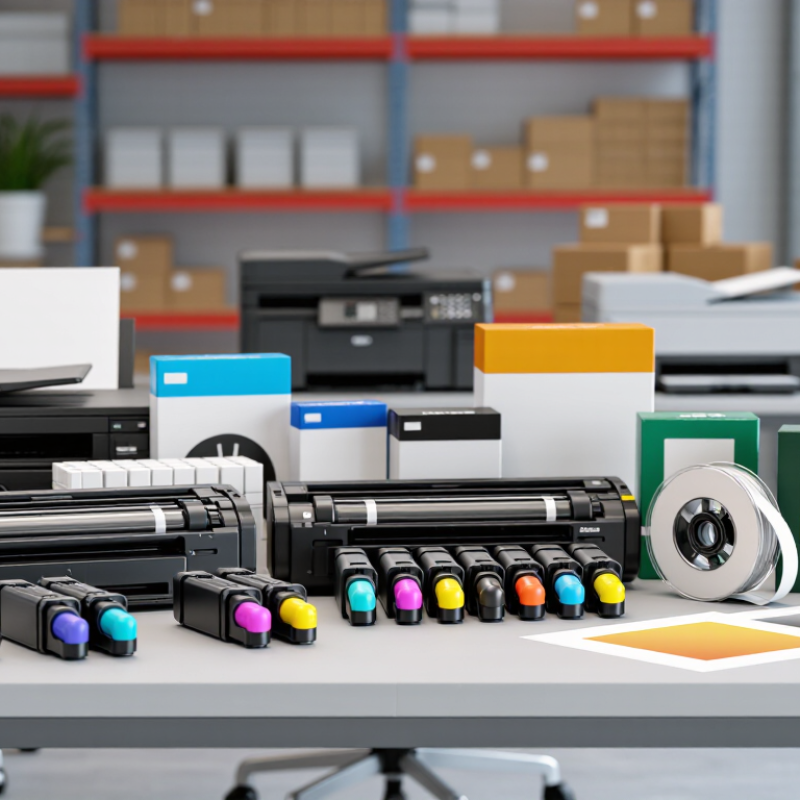
What Are the Top Printer Supplies for Global Buyers?

Printer Supplies: Definition and Main Product Categories

Printer supplies are the consumable and replaceable parts that keep printing equipment usable. The main categories include ink cartridges, toner cartridges, ribbons, paper, printheads, drums, and maintenance kits. Ink is commonly used in home and photo printing. Toner supports fast, high-volume document production. Paper remains essential, although its weight, coating, size, and moisture resistance vary widely.

Market data shows why global buyers should separate these categories carefully. Grand View Research estimated the global ink cartridge market at about USD 17 billion in 2023, with continued growth expected through 2030. Smithers reports that digital printing demand is expanding across commercial and packaging applications. Meanwhile, IDC’s hardcopy research continues to track changing device shipments and lower office print volumes in several mature markets. These figures are useful, but forecasts are not guarantees. Product compatibility, storage conditions, and regional power standards still affect real purchasing results. The categories look simple. They are not.

Tips: Check the equipment model, cartridge yield, page coverage, and storage temperature before ordering. ISO/IEC yield measurements help compare pages more fairly, but actual results depend on document density. Keep supplies sealed and dry. A low unit price may hide higher waste, shipping, or replacement costs. I have found that buyers often focus on cartridge price alone, which can be a costly mistake. Supplier documentation and independent test data deserve equal attention.

How Global Buyers Evaluate Printer Supply Quality

What Are the Top Printer Supplies for Global Buyers?

Global buyers rarely judge printer supplies by price alone. They inspect page yield, print density, color consistency, packaging, and delivery records. A cartridge that performs well in one machine may fail in another. Compatibility data must match the exact printer model, firmware, and paper type. Small details matter.

Experienced purchasing teams request production samples before placing large orders. They print text, fine lines, images, and repeated pages under normal office conditions. Then they measure smearing, fading, streaks, and remaining usable ink or toner. They also compare declared yield with actual output, rather than trusting optimistic laboratory figures. Batch numbers, inspection reports, and traceable production records make quality easier to verify later.

However, testing is not flawless. A short trial may hide problems caused by heat, humidity, storage, or long-term use. Buyers should review supplier controls, material consistency, sealing methods, and complaint response procedures. Clear technical documents also support safer handling and more reliable customs communication. Independent inspection can strengthen evidence when order volumes or market requirements are high. I would not rely on a polished sample alone. Consistent performance across several batches is stronger proof, although it takes more time and budget.

Top Printer Supplies for Different Printing Environments

Printer supplies should match the environment, not merely the machine. In busy offices, high-yield toner, waste containers, and maintenance kits support stable monthly output. ISO/IEC 19752 testing helps buyers compare monochrome toner yields fairly. Still, real results vary with page coverage, paper dust, and duplex settings. Small details matter.

Home users usually need pigment or dye-based ink, depending on document and photo needs. Pigment ink suits sharp text and longer storage. Dye ink can produce brighter photo colors, but fading remains a concern near windows. Grand View Research valued the global printing inks market at approximately 21.5 billion dollars in 2023. Its report projects continued growth through 2030. That figure includes wider industrial applications, so it should not be treated as a direct household forecast.

Warehouses, retail counters, and production floors need different supplies. Thermal rolls work well for labels and receipts because they avoid liquid ink. In dusty areas, sealed media and regular printhead cleaning are essential. Smithers’ The Future of Digital Print to 2029 identifies packaging and labels as important growth areas in digital printing. Recycled paper can reduce material impact, but poor storage may cause curling and feed errors. I have seen buyers focus on cartridge price and overlook downtime. That is a costly mistake. Supplier documentation, yield testing, compatibility records, and local recycling access deserve equal attention.

Compatibility, Sourcing, and Compliance in International Markets

Global buyers need printer supplies that match the machine, region, and workload. Compatibility is more than a model number. Buyers should verify cartridge geometry, firmware requirements, page yield, voltage, and paper specifications. ISO/IEC 24711 defines methods for measuring ink-cartridge yields, while ISO/IEC 19752 covers monochrome toner yields. These standards make supplier comparisons less subjective.

The market is large but not simple. Fortune Business Insights valued the global ink cartridge market at about USD 21.8 billion in 2023 and expects continued growth through the decade. That demand attracts inconsistent aftermarket quality. In practice, a low-priced cartridge may produce pale text, leaking seals, or unstable color after storage. We have seen purchasing teams overlook humidity during ocean transport. That mistake can erase the original savings.

Sourcing also requires documented compliance. Ask for safety data, material declarations, batch records, and test results before placing volume orders. For European shipments, suppliers should assess REACH, RoHS, and waste obligations; other markets may impose different chemical and labeling rules. Quocirca’s 2024 Global Print Security Landscape reported that 61% of organizations experienced a print-related data breach during the previous year. Supplies should therefore support secure workflows, not only output quality. A supplier’s audit trail, replacement policy, and response time matter. Unfortunately, many buyers still judge reliability from a sample box alone. That is not enough.

Top Printer Supplies for Global Buyers

The chart uses a 1–5 operational planning index, where 5 indicates a higher level of attention required for compatibility, international sourcing, and compliance. The index is intended for procurement planning rather than market-share measurement.

Toner and ink cartridges typically require the closest model and regional specification checks. Drum and fuser units demand careful equipment compatibility and technical sourcing, while thermal ribbons generally have simpler compliance requirements but still require correct width, length, material, and heat-resistance specifications.

Cost, Availability, and Sustainability in Global Purchasing

What Are the Top Printer Supplies for Global Buyers?

Cost, availability, and sustainability shape every serious printer-supply decision. The lowest unit price can mislead. Buyers should calculate total landed cost, including freight, duties, storage, and replacement rates. Page yield matters more than shelf price. A cartridge priced at six dollars may print fewer pages than one priced at eight. That difference becomes significant across thousands of pages.

Availability also protects production schedules. I have seen purchasing teams save money on bulk orders, then wait weeks for delayed shipments. Regional warehouses, stable production capacity, and clear lead times reduce this risk. Buyers should request current inventory figures, batch information, and quality records. A small test order is sensible. It exposes color variation, leakage, or poor print density before a large commitment.

Sustainability requires evidence, not attractive wording. Look for recycled materials, reduced packaging, refillable designs, and documented collection programs. Responsible suppliers should provide material details and consistent quality data. Remanufactured supplies can reduce waste, but performance is not always equal. That needs testing. A practical evaluation should track pages printed, failure rates, packaging volume, and disposal options. Some buyers focus heavily on carbon claims while overlooking transport distance and rejected products. I have made that mistake myself. Environmental goals work best when measured beside cost and supply reliability.

What Are the Top Printer Supplies for Global Buyers? - Cost, Availability, and Sustainability in Global Purchasing

Supply Category Typical Application Indicative Wholesale Cost* Typical Yield or Capacity Global Availability Sustainability Profile Key Purchasing Consideration
Black Toner Cartridges High-volume monochrome office and commercial printing US$25–US$180 per cartridge, depending on capacity and specification Approximately 2,000–25,000 pages at standard coverage Very High
Widely stocked and suitable for consolidated shipments
Long shelf life; empty cartridges can often enter approved collection or remanufacturing programs Verify page yield, powder compatibility, packaging protection, and customs classification
Color Toner Cartridges Color documents, presentations, marketing materials, and graphics US$35–US$220 per cartridge Approximately 1,500–20,000 pages at standard coverage High
Common in major regional distribution channels
Higher material use than monochrome printing; recycling and return logistics can reduce landfill waste Compare total cost per color page rather than cartridge price alone
Inkjet Cartridges Home, education, small-office, and low-to-medium volume color printing US$8–US$90 per cartridge Approximately 100–1,500 pages, depending on cartridge size and print coverage High
Broad availability, but model compatibility is critical
Compact packaging is possible; cartridges require controlled handling and collection because of mixed materials Check nozzle compatibility, drying resistance, shelf life, and transport temperature limits
Bulk Ink Refill Bottles High-frequency inkjet printing and systems designed for refillable tanks US$5–US$35 per bottle, commonly supplied in 70–1,000 ml sizes Approximately 2,000–15,000 pages per multi-bottle set Medium to High
Availability varies by region and printer system
Less packaging and lower material use per printed page than many single-use cartridges Use leak-resistant packaging and confirm ink chemistry before placing large orders
Copy and Printing Paper Everyday office documents, forms, invoices, and general commercial printing US$3–US$12 per 500-sheet ream for standard office grades; regional freight can be significant Typically 75–90 g/m²; 500 sheets per ream Very High
Usually sourced regionally because of weight and freight cost
Look for recycled content, responsibly managed fiber, chlorine-reduced processing, and recyclable wrapping Optimize pallet density and moisture protection to reduce damage during international transport
Thermal Transfer Ribbons Shipping labels, product identification, warehousing, and barcode printing US$2–US$25 per roll, depending on width, length, and coating Approximately 50–450 m per roll High
Standard sizes are commonly available internationally
Used ribbon and cores require separate waste handling; resin and wax formulations have different material profiles Match ribbon width, winding direction, core size, and operating temperature to the printer
Direct Thermal Labels Short-term shipping, receipt, ticketing, and logistics labels US$3–US$30 per roll, depending on dimensions and label count Approximately 500–5,000 labels per roll High
Common sizes are broadly distributed
No ribbon is required, reducing consumable components; select recyclable facestock and adhesive where appropriate Consider image life, heat and sunlight exposure, adhesive performance, and liner disposal
Printer Maintenance Kits Scheduled replacement of rollers, fusers, drums, or other wear components US$40–US$500 per kit, depending on equipment class and component count Often designed for approximately 50,000–300,000 pages Medium
Stocking levels can be lower than those for standard cartridges
Extends equipment service life and can reduce premature machine replacement; worn parts need responsible disposal Confirm printer model, technician requirements, installation instructions, and spare-part lead time

*Indicative wholesale ranges in U.S. dollars for international purchasing. Actual prices vary by region, order quantity, specifications, freight, duties, taxes, certifications, and exchange rates. Page yields are approximate and commonly based on standard coverage conditions.