What Is Urolithin A Bulk Powder Used For?
Urolithin A bulk powder is drawing attention in sports nutrition, healthy aging, and ingredient research. It is a postbiotic compound linked to the breakdown of ellagitannins found in foods such as pomegranates, walnuts, and berries. Not everyone produces it efficiently. That difference matters.
Professor Johan Auwerx, a leading researcher in mitochondrial biology, has described urolithin A as “a natural compound that helps activate mitophagy,” the cellular process that removes damaged mitochondria. This explanation gives the ingredient scientific context without promising a miracle. In practical terms, urolithin‑a‑bulk‑powder is commonly studied for its potential role in mitochondrial function, muscle endurance, and age-related cellular health. Human research has reported encouraging signals, including changes in muscle-related biomarkers and physical performance. The evidence is still developing.
Powder form can support flexible manufacturing. It may be used in capsules, sachets, tablets, or research formulations. A clean production room, accurate weighing, and protected storage help preserve consistency. Moisture and heat remain practical concerns. Small details matter.
Yet the story is not complete. Research outcomes can depend on dosage, purity, formulation, age, diet, and individual metabolism. Bulk material should not be treated as a finished medical product. Quality documentation, identity testing, microbiological analysis, and stability data deserve careful review. Some marketing claims move faster than the science. That deserves skepticism.
A responsible introduction should therefore present urolithin A as a promising research ingredient, not an instant solution. Further controlled studies may clarify who benefits, how much is appropriate, and whether long-term use remains meaningful.
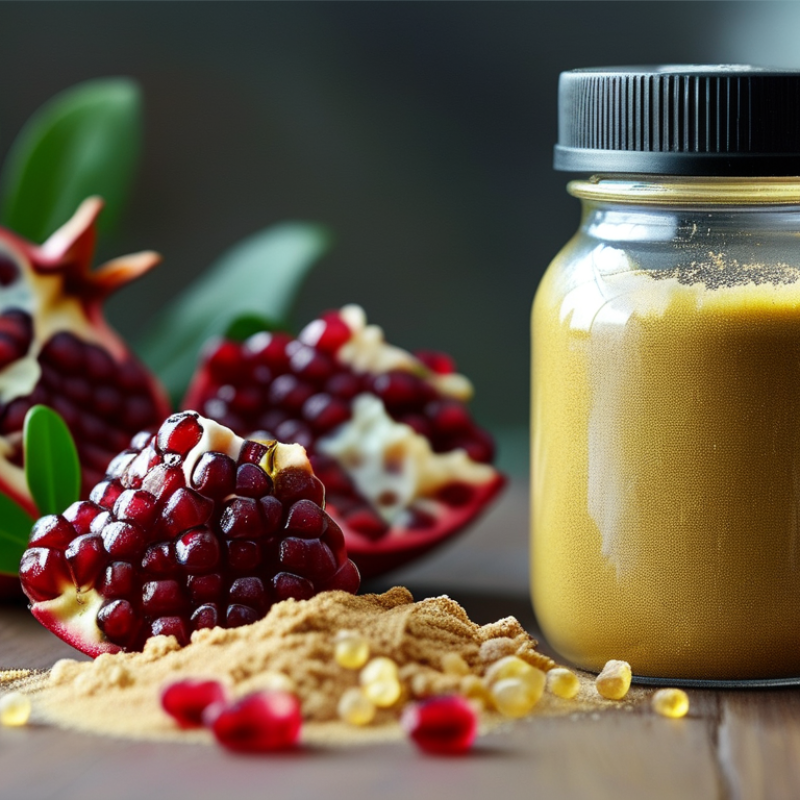
What Is Urolithin A Bulk Powder?
Urolithin A bulk powder is a concentrated, unformulated ingredient containing urolithin A. It is a postbiotic compound formed when certain gut microbes process ellagitannins from foods such as pomegranates and berries. Not everyone produces it naturally. Gut microbiome differences matter.
The powder is commonly used in laboratory research and nutritional product development. Researchers study its possible effects on mitochondrial function, muscle performance, and cellular recycling. These areas are promising, but human evidence remains limited. Urolithin A is not a proven treatment for disease, and bulk powder should not be confused with a finished supplement.
Quality deserves close attention. A reliable specification should identify purity, testing methods, moisture, microbial limits, and possible heavy metals. High-performance liquid chromatography can help verify the stated concentration. The powder may look simple, but its handling still matters. Light, humidity, and poor storage can affect stability.
Dosage cannot be assumed from the word “bulk.” A measured amount depends on purity, formulation, research purpose, and professional guidance. I would also avoid treating early study results as settled facts. Personal responses may differ, and long-term safety data are still developing. Careful sourcing and transparent testing provide a more dependable basis for use.
What Is Urolithin A Bulk Powder Used For?
| Use or Research Area | How It May Be Used | Reported Research Findings | Current Evidence Status | Important Considerations |
| Mitochondrial health | Used as a research ingredient intended to support mitochondrial quality-control pathways, including mitophagy. | Preclinical and early human studies suggest that urolithin A may influence markers associated with mitochondrial function and cellular energy metabolism. | Promising but limited | Changes in biomarkers do not necessarily prove a clinical benefit for every user. |
| Muscle endurance and physical performance | Investigated as a supplement for healthy adults, particularly in research involving age-related changes in muscle function. | Clinical trials have reported improvements in selected measures of muscle endurance and, in some studies, physical performance or muscle-related biomarkers. | Early clinical evidence | It should not be presented as a treatment for sarcopenia, weakness, or any diagnosed muscle disorder. |
| Healthy aging research | Used in studies examining mitochondrial activity, muscle function, and age-associated physiological changes. | Human studies have mainly involved middle-aged or older adults and have generally evaluated short- to medium-term supplementation. | Research use only for many claims | Long-term effects, effects in younger populations, and effects in people with chronic disease remain insufficiently established. |
| Exercise recovery research | Investigated for possible effects on muscle recovery, cellular stress responses, and exercise-related mitochondrial adaptation. | Laboratory and animal research provides a biological rationale, but human evidence for faster recovery is still developing. | Insufficient human evidence | It should not replace adequate nutrition, hydration, sleep, or a properly designed exercise program. |
| Cellular stress and inflammation research | Studied for possible effects on pathways related to cellular stress, inflammation, and mitochondrial turnover. | Some laboratory and early clinical findings suggest changes in selected inflammatory or metabolic markers, but results are not sufficient to establish disease-treatment benefits. | Experimental | Urolithin A is not an approved treatment for inflammatory, metabolic, cardiovascular, or neurological diseases. |
| Bulk powder formulation | Used as a raw material for research formulations, capsules, tablets, or measured powder servings. | Published human studies have commonly evaluated daily amounts ranging from 250 mg to 1,000 mg for limited study periods, depending on the protocol. | Dose depends on the study | Published study doses are not automatically personalized recommendations. Accurate weighing, testing, and contamination control are important for bulk powder. |
| Safety and tolerability monitoring | Used in clinical research where gastrointestinal symptoms, laboratory tests, and adverse events are monitored. | Short-term human studies have generally reported acceptable tolerability, although mild gastrointestinal complaints may occur. | Short-term data available | People who are pregnant, breastfeeding, taking medication, or managing a medical condition should consult a qualified healthcare professional before use. |
Scientific context: Urolithin A is a gut-derived metabolite produced from ellagitannin-rich foods by some individuals. Its production can vary according to gut microbiota, so direct supplementation is used in research to provide a more consistent amount. Current evidence supports further study, but it does not establish urolithin A bulk powder as a proven treatment or prevention product.
Selected research sources: Cell Metabolism (2016), Nature Medicine (2017), Nature Aging (2022), and published human safety and exercise-related clinical studies of urolithin A.
How Urolithin A Bulk Powder Is Produced and Formulated
What Is Urolithin A Bulk Powder Used For?
Urolithin A bulk powder is used in capsules, tablets, sachets, and research formulations. It is a metabolite produced when gut microbes process ellagitannins. Because this conversion varies between people, manufacturers usually produce it under controlled conditions. Chemical synthesis and microbial bioconversion are both possible routes. The selected route affects cost, impurities, and formulation behavior.
How Urolithin A Bulk Powder Is Produced and Formulated
Production begins with qualified raw materials and controlled reaction conditions. The intermediate is then purified, dried, milled, and tested. High-performance liquid chromatography can confirm identity and assay. Testing should also examine residual solvents, heavy metals, microbial limits, moisture, and particle size. A 2022 randomized study in Nature Metabolism evaluated 66 adults using 500 or 1,000 milligrams daily for four months. That report supports continued safety research, not unlimited claims. The powder may absorb moisture, so low-humidity processing and sealed packaging matter. Formulators often add flow agents or use granulation to improve capsule filling. These choices need validation.
Tips: Ask for a certificate of analysis, chromatographic method, batch number, and stability data. Check whether testing covers the finished powder, not only the starting material. A 98% assay alone proves little. It does not confirm clean impurities or long-term stability. Some specifications remain inconsistent across suppliers, which deserves more scrutiny. I would also review storage conditions after opening. Small handling errors can change a good powder’s performance.
Common Uses of Urolithin A Bulk Powder
Urolithin A bulk powder is mainly used as a formulation ingredient in research and nutraceutical development. It is produced by microbial conversion of ellagitannins, compounds found in pomegranates and some berries. The body does not produce urolithin A equally well, which makes standardized powder useful for controlled product testing. Researchers commonly examine its relationship with mitophagy, mitochondrial function, and muscle endurance.
Human evidence remains developing. A randomized clinical report in JAMA Network Open studied 66 adults aged 65 to 90 years using 1,000 or 2,000 milligrams daily for four months. The report found favorable changes in selected mitochondrial and inflammatory markers, although the primary strength outcomes were not consistently significant. That matters. A biomarker improvement is not the same as a proven performance benefit.
Bulk powder is also used to prepare capsules, sachets, and analytical samples. Manufacturers typically test identity, assay strength, moisture, microbial limits, and heavy-metal contamination before formulation. The United States Pharmacopeia’s dietary-supplement quality framework supports this type of testing, but urolithin A does not have a universal monograph. Batch variation can therefore become a practical concern.
Some users choose it for healthy-aging formulations or exercise-recovery research. Those applications should not be presented as disease treatment. Dosage, absorption, and long-term safety still need broader human data. More evidence is needed.
Potential Health Benefits and Research Applications
What Is Urolithin A Bulk Powder Used For?
Potential Health Benefits and Research Applications
Urolithin A is a compound produced when certain gut bacteria process ellagitannins from foods such as pomegranate and berries. Not everyone produces it efficiently. Bulk powder is mainly used in controlled research, formulation testing, and laboratory analysis. Researchers examine whether it supports mitophagy, the cell’s process for removing damaged mitochondria. This may influence muscle function, cellular energy, and healthy aging. The evidence is promising, but still developing.
Human studies have explored muscle endurance, recovery, and mitochondrial performance in older adults. Some findings suggest potential benefits, yet results can vary by dose, age, health status, and study design. I would not describe urolithin A as a proven anti-aging solution. The picture remains incomplete. Bulk material also helps researchers compare purity, stability, and dose-response effects under consistent conditions. It may be tested in powders, capsules, or experimental nutrition formulas.
Tips: Choose material with independent testing, clear specifications, and a certificate of analysis. Check identity, purity, heavy metals, and microbial limits. Store the powder in a cool, dry place away from direct light. Do not assume that a research-grade ingredient is suitable for personal use. A qualified professional should review dosage and safety questions, especially when medications or chronic conditions are involved.
Urolithin A Bulk Powder: Potential Health Benefits and Research Applications
This evidence map summarizes the current maturity of research across major application areas. Scores are an editorial synthesis of published evidence, not clinical efficacy ratings: 1 = mainly preclinical or mechanistic evidence, 2 = early human evidence, and 3 = stronger controlled human evidence.
Research context: Human studies have primarily examined mitochondrial health, muscle function, exercise capacity, safety, and bioavailability. Research involving inflammation, metabolic health, neuroprotection, and healthy aging remains earlier-stage and should not be interpreted as proof of therapeutic benefit.
Selected source: Singh et al., Nature Metabolism (2019), “The urolithin A molecule improves muscle strength, exercise capacity, and mitochondrial health in older adults,” DOI: 10.1038/s42255-019-0071-5.
Safety, Dosage, and Storage Considerations
What Is Urolithin A Bulk Powder Used For?
Urolithin A bulk powder is mainly used as a research ingredient or as a raw material for measured dietary formulations. It is not automatically a finished supplement.
A 2022 randomized trial in Nature Metabolism followed 66 adults for four months. Participants received 500 or 1,000 milligrams daily. Researchers reported good tolerability, but the study was small and short.
That matters. Long-term safety remains less certain.
Dosage should follow human research, product testing, and professional advice. Do not treat 1,000 milligrams as a universal recommendation. Check the certificate of analysis for identity, assay strength, heavy metals, microbes, and residual solvents.
The U.S. Food and Drug Administration’s guidance on new dietary ingredients also supports careful documentation before commercial use. People with medical conditions, pregnancy, breastfeeding, or regular medication use should consult a qualified clinician. Interaction data are still limited.
Store the powder in a tightly sealed, light-resistant container. Keep it in a cool, dry place, away from steam, sunlight, and repeated temperature changes. A kitchen cabinet may work better than a humid bathroom.
Use a clean, dry scoop. Moisture can cause clumping and may affect testing accuracy. Follow the supplier’s labeled temperature range when available.
Bulk handling sounds simple, but it is easy to lose traceability after opening. Record the opening date, lot number, and storage conditions. That small habit is often overlooked.



 Distributors
  SDS Download
  Contact