
Partner Login
Enter your username and password here on order to log in on the partner portal:
No registered partner yet?
Register nowA Value Vacuum Pump is a practical tool for removing air, moisture, and other gases from a sealed system. It does not create perfect emptiness. Instead, it lowers pressure until the process reaches a useful vacuum level. This principle supports refrigeration servicing, laboratory testing, packaging, drying, and industrial maintenance.
Vacuum technology author John F. O’Hanlon offers a helpful perspective: “A vacuum pump does not remove pressure; it creates a pressure difference.” This idea explains why pump performance depends on the entire system. Hose length, fitting quality, oil condition, and leakage can change the final result. A powerful pump cannot fully correct a poorly sealed connection.
The operating process is fairly direct. The pump draws gas through an inlet, compresses it internally, and releases it through an exhaust port. Rotary vane models use moving vanes and oil to create a tight seal. Oil-free designs use different materials and may suit cleaner applications.
The details matter.
In real work, the vacuum gauge may fall slowly, stop early, or rise after isolation. That behavior can suggest moisture, a leak, or contaminated oil. Diagnosis is not always obvious. I have found that beginners often blame the pump too quickly, while experienced technicians inspect the hoses first.
This guide explains how a Value Vacuum Pump works, what its main components do, and how users can evaluate performance responsibly. It also considers practical limitations, because no pump performs perfectly under every condition.
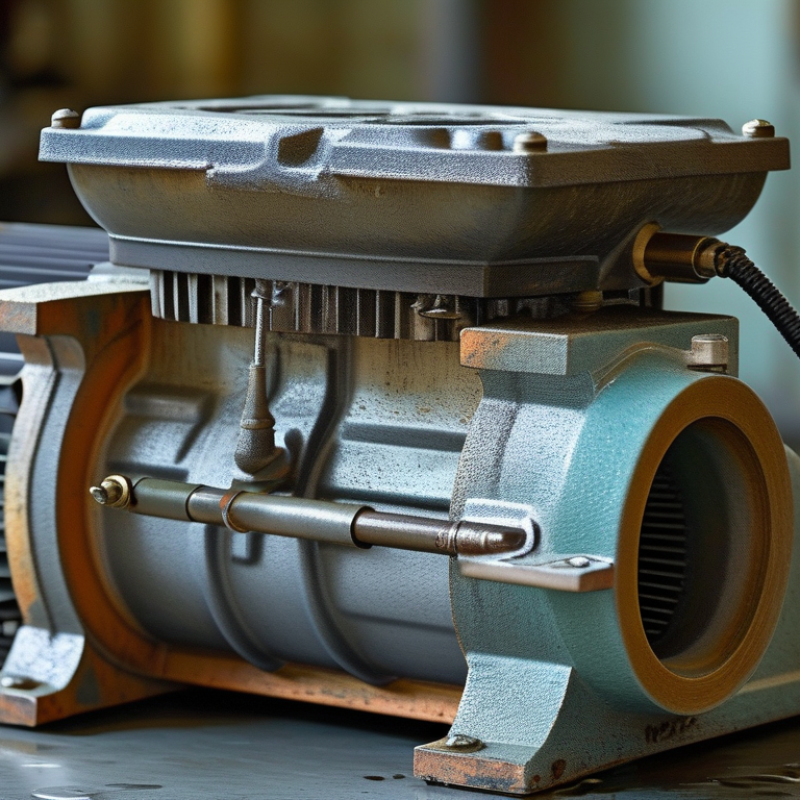
A value vacuum pump is a cost-conscious pump designed to remove gas from a sealed chamber. Its mechanism is simple: trapped gas enters the inlet, becomes compressed, and leaves through an exhaust valve. The useful result is lower pressure. It is not “value” merely because it is cheap. Total ownership also includes oil, seals, electricity, noise, and maintenance.
Common types serve different working conditions. Rotary-vane pumps often reach approximately 10⁻³ mbar and suit general laboratory or service work. Diaphragm pumps are oil-free and handle moderate vacuum levels, often near 1 mbar. Scroll and dry-screw pumps avoid oil contamination but usually cost more. Core specifications include ultimate pressure, pumping speed in m³/h, inlet size, motor power, gas-ballast function, noise, duty cycle, and vapor tolerance. ISO 21360-1:2020 provides a framework for measuring pumping speed and ultimate pressure, supporting fairer comparisons.
Market data shows why selection matters. Grand View Research estimated the global vacuum-pump market at roughly USD 5.8 billion in 2023, with steady growth projected through 2030. MarketsandMarkets also forecasts continued expansion, although its estimates differ by scope and methodology. That difference deserves attention. A catalog number may describe ideal laboratory conditions, not a wet process at 40°C. In field use, technicians should check the actual operating pressure, leak rate, service interval, and vapor load. The smallest pump is rarely the best choice. Sometimes, it only works harder.
A value vacuum pump is usually an oil-sealed rotary-vane pump built for practical, stable evacuation. In a two-stage design, an eccentric rotor turns inside each chamber. Sliding vanes divide the chamber, trap gas, and compress it toward the exhaust. Oil fills microscopic gaps, reducing internal leakage. The first stage lowers the inlet pressure. The second stage compresses the remaining gas again.
With sound seals, warm oil, and a clean system, this arrangement can reach about 15–25 microns, or roughly 2–3.3 pascals. That range is a working target, not a promise. The 2024 Global Vacuum Pump Market Report by The Business Research Company reported continued demand from semiconductor, chemical, and laboratory equipment sectors. Yet market growth does not guarantee field performance. A small hose leak can matter more than pump size.
Technicians should run the pump long enough to warm the oil before judging its vacuum. Moisture may require controlled gas ballast, although excessive ballast reduces the final vacuum. A calibrated vacuum gauge should sit near the chamber, not only at the pump inlet. ISO 21360 emphasizes standardized methods for measuring vacuum pump performance, including pressure and gas-flow conditions. I would also question any 15-micron claim made with cold oil or an unverified gauge. The reading may look precise. The test may not be.
A two-stage rotary-vane vacuum pump removes gas in successive compression cycles. The first stage reduces the pressure substantially, while the second stage further compresses the remaining gas and can achieve a typical deep-vacuum level of approximately 15–25 microns under suitable conditions. Values shown are representative reference points and may vary with pump design, leakage, vapor load, temperature, and maintenance.
What Is a Value Vacuum Pump and How Does It Work?
A value vacuum pump is typically an oil-sealed rotary vane pump designed for dependable vacuum service at a practical cost. Its operation follows three clear stages: oil sealing, gas compression, and exhaust discharge. During operation, a rotor turns off-center inside the pump chamber. Sliding vanes follow the chamber wall and create expanding spaces at the inlet. Gas enters these spaces and becomes trapped.
The oil fills tiny gaps between the vanes, rotor, and chamber. This seal reduces gas leakage and also carries heat away from moving parts. As the rotor continues turning, each trapped gas pocket becomes smaller. Pressure rises steadily. When the pressure exceeds the exhaust valve setting, compressed gas pushes the valve open and leaves the chamber. An oil separator can reduce visible oil mist in the discharged gas. The process is efficient, but never perfectly clean.
Tips: Check the oil level before use. Cloudy oil may indicate moisture or contamination. Let the pump reach operating temperature when possible. This helps water vapor leave the oil. Keep the inlet filter clean, because dust can damage sealing surfaces. A common oversight is stopping the pump under vacuum. In some systems, that can pull oil backward toward the chamber. Use the correct isolation procedure instead. Small mistakes matter. Regular inspection of hoses, valves, and exhaust filters improves reliability, although maintenance intervals should follow measured operating conditions rather than guesswork.
A value vacuum pump removes air, moisture, and non-condensable gases from refrigeration systems before charging. Its performance depends on three practical measurements: CFM, ultimate vacuum, and connection size.
CFM describes pumping speed, not final vacuum depth. A higher CFM can shorten evacuation time on larger systems. However, hose diameter, core restrictions, and moisture often matter more than advertised airflow. AHRI Standard 740-2019 explains that pump performance testing requires controlled conditions, so catalog figures should not be treated as field results. Numbers can mislead.
Ultimate vacuum is usually shown in microns or pascals. A lower micron reading indicates deeper evacuation. U.S. EPA GreenChill guidance commonly recommends reaching 500 microns or lower for suitable system evacuation. A digital micron gauge should sit at the system, away from the pump inlet. Otherwise, the gauge may display a comforting but inaccurate reading. I have seen technicians blame the pump when a leaking hose caused the real problem.
Many service systems use 1/4-inch SAE flare ports, while larger equipment may use 3/8-inch connections. A 3/8-inch vacuum hose can reduce flow resistance during evacuation, especially with removable valve cores. The adapter must seal tightly and tolerate vacuum service. Oil condition matters too. Contaminated oil can weaken ultimate vacuum performance. A modest two-stage pump may perform reliably, but only with short hoses, warm components, and careful leak checks. That last condition is easy to overlook.
A value vacuum pump removes air, moisture, and non-condensable gases from a refrigeration system. Its motor turns an oil-sealed rotary mechanism, lowering pressure inside the circuit. Clean oil is essential because it seals internal clearances and carries away heat. The ASHRAE Handbook—Refrigeration 2022 commonly supports evacuation targets near 500 microns for many service applications. A micron gauge, not the pump gauge, should verify this level.
Maintenance begins with oil replacement. Change the oil after roughly 50–100 operating hours, or sooner after wet, dirty, or heavily contaminated work. This interval is a field benchmark, not a universal rule. Oil that looks cloudy, smells sharp, or contains particles has already lost reliability. The U.S. EPA’s refrigerant servicing guidance also emphasizes proper evacuation and leak prevention, although real systems can still surprise technicians. A vacuum that rises quickly after isolation may indicate a leak, trapped moisture, or a loose connection.
Tips:
Warm the pump before demanding deep vacuum. Use short, wide hoses and remove core restrictions when appropriate. Perform a standing vacuum test after isolation, then watch the micron reading for several minutes. A stable reading is stronger evidence than a fast initial drop. Check fittings with an approved leak detector before evacuation. Record operating hours, oil condition, final vacuum, and rise-test results. Small records prevent repeated guesses. One improvement remains worth testing: shorten oil intervals when the pump repeatedly handles moisture-heavy systems.